Best Time To Visit Moreton Island: Seasons, Weather And Whale Season (2026)
There isn't a single wrong time to visit Moreton Island, but the month you pick changes what you actually get: calmer water and busier beaches in summer, or fewer people and a real shot at a whale from the ferry deck in winter. Here's how the seasons actually differ, using the tour operators' own published seasonal advice.
Trip planning note: prices, permits, timetables and historical ratings below are estimates or background examples, not current booking quotes. Use the provider calendar for the selected departure and confirm all mandatory fees.
Choose the experience first, then check its calendar: warm-water activities and the whale season have different timing. Explore Moreton Wrecks And Wildlife Cruise
Moreton Island runs day tours year-round, and there's no closed season the way some destinations have. What changes, month to month, is water clarity, crowd levels, whale and dugong sighting odds, and how comfortable the sandy walking and driving actually feels underfoot.
Moreton Island by season
Compiled from the operators' own published seasonal advice across the site's tour listings and the site's migrated homepage FAQ, 2026.
The Quick Answer
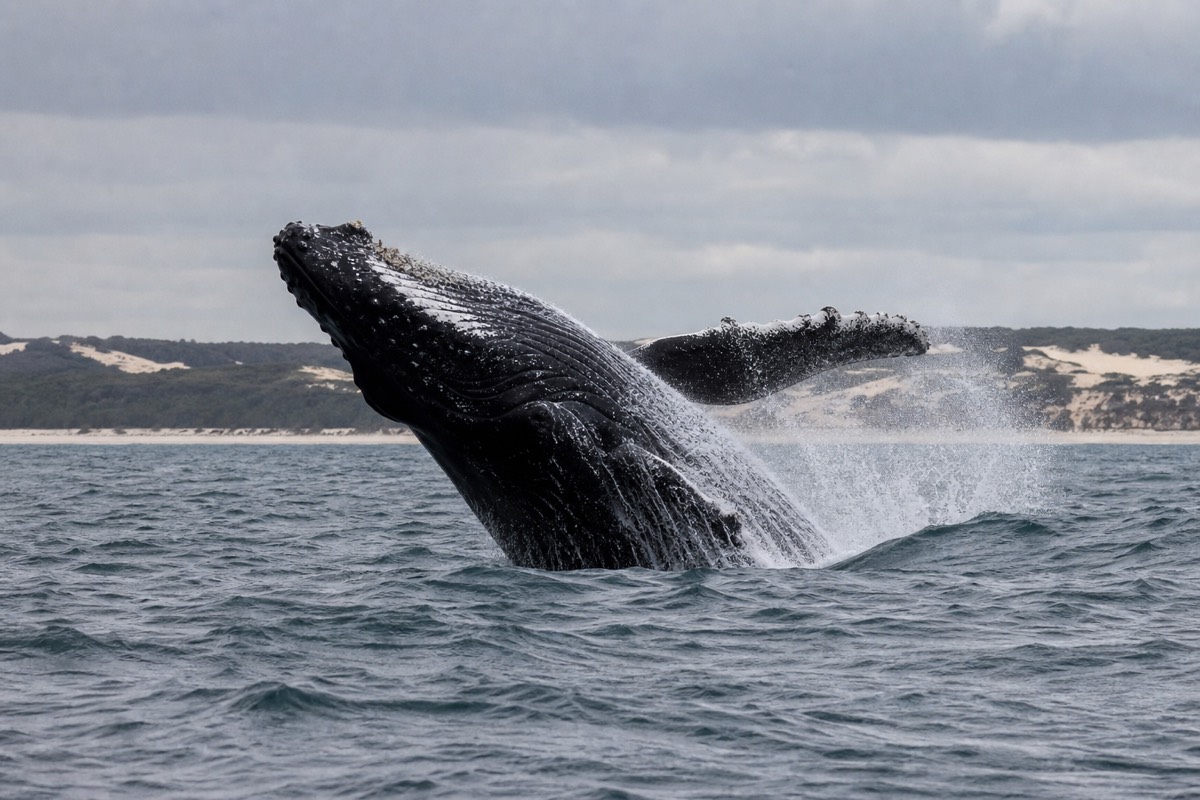
December to February brings the warmest water and calmest seas for snorkeling and beach time, but also the biggest crowds and highest prices. June to October is whale season, peaking in August and September with reported sighting odds around 80-95% on a good tour. September works well as a genuine middle ground: decent whale odds, warming water, and fewer crowds than summer.
What's The Best Month Overall?
If forced to pick one month, September is the strongest all-round choice: it sits at the tail of whale season with still-decent sighting odds, water is warming toward summer conditions, and crowds and prices remain well below the December-February peak. If your priority is purely whale watching, push toward August. If it's purely calm, warm water for snorkeling and beach time, January or February deliver the most reliable conditions, at the cost of the biggest crowds of the year.
Season By Season
| Season | Months | Weather & water | Trade-off |
|---|---|---|---|
| Summer | Dec-Feb | Warm/hot (28-32°C+), warm sea, calm and clear for snorkeling | Highest crowds and prices of the year |
| Autumn | Mar-May | Stable, clear turquoise water conditions | Shifting winds on some crossings |
| Winter | Jun-Aug | Cooler (18-25°C), clear aerial visibility, seas often still calm enough for tours | Cooler water for swimming |
| Spring | Sep-Nov | Warming toward summer, pleasant | Some bumpier water potential on open crossings |
When Is Whale Season, And What Are The Real Odds?
Humpback whales migrate along the Queensland coast roughly June to October, with the most reliable sightings in August and September, when good tours report an 80-95% success rate. This lines up directly with the site's own tour data: three separate Moreton Island tours report seeing whales during their crossing in a window between June and October. See our dedicated whale watching guide for the full breakdown by tour.
When Is The Best Time For Calm Water And Snorkeling?
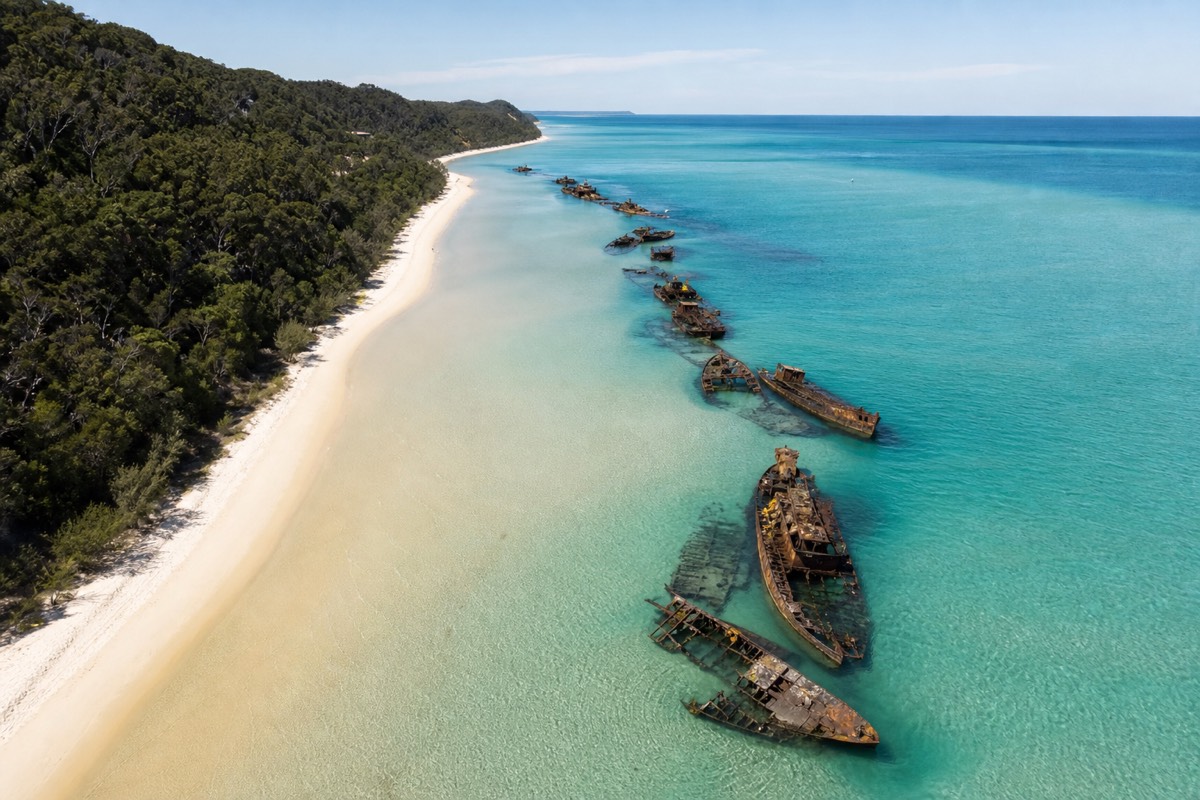
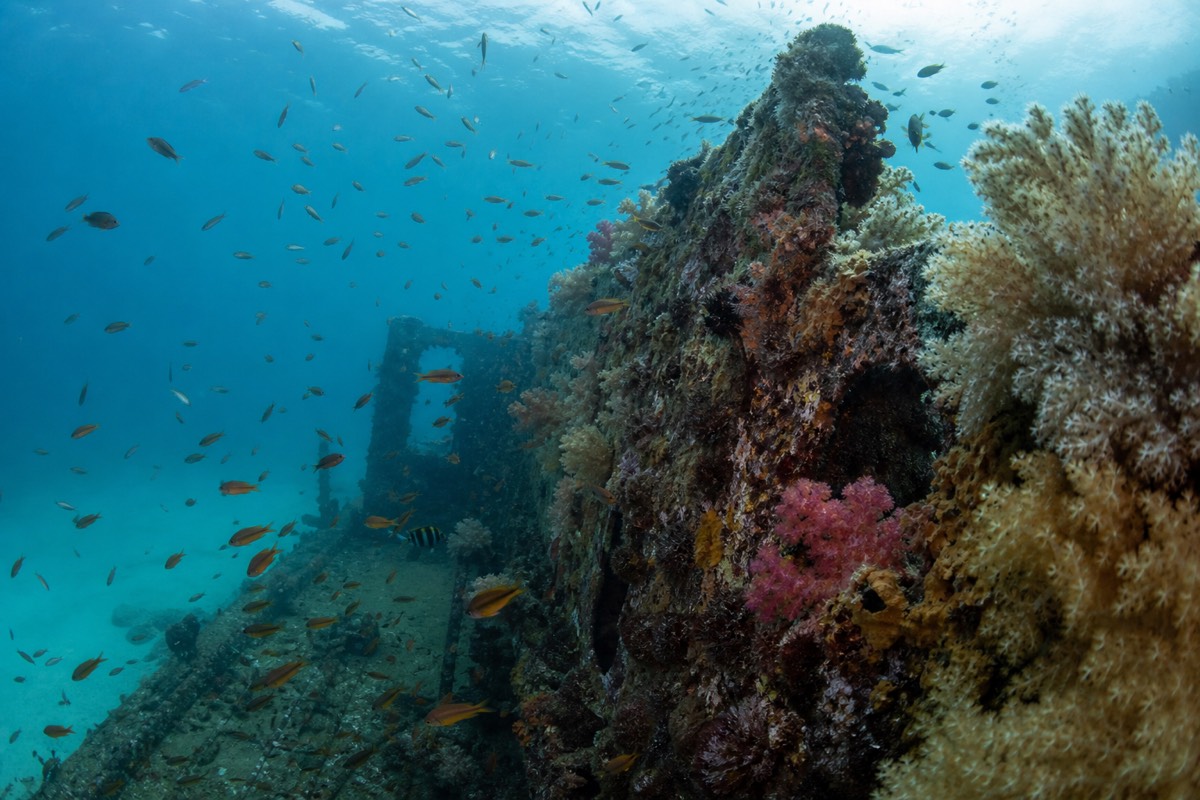
January and February bring the calmest seas and warmest water of the year, ideal for snorkeling the Tangalooma Wrecks and general beach time, at the cost of the year's biggest crowds. If you want summer-quality water without the peak-season crush, late November or March sit just outside the busiest window while still offering warm, settled conditions.
When Is The Quietest Time To Visit?
The shoulder months, roughly March-May and September-November, are consistently quieter than the December-February peak, with fewer cruise-ship day-tripper crowds at Tangalooma and shorter waits at the popular snorkeling and sandboarding spots.
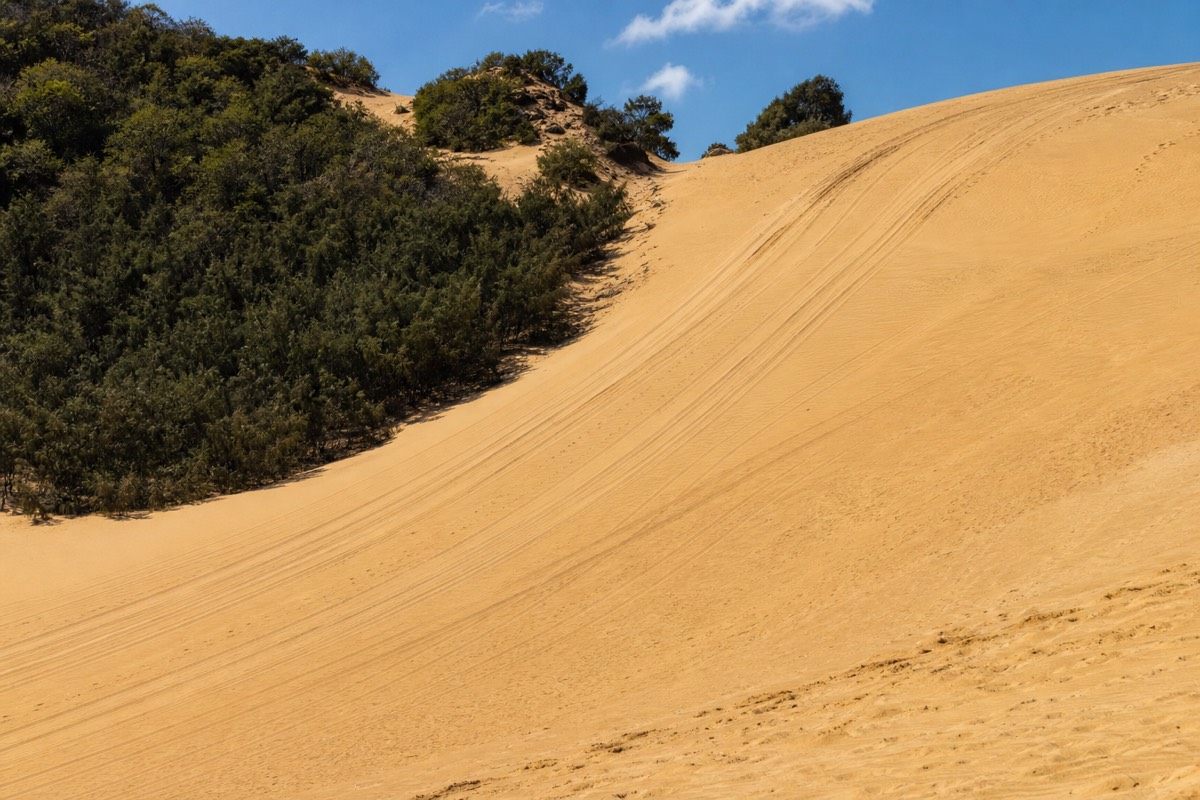
Even within peak summer, timing your day helps: arriving on the first ferry (around 7:00-8:00am) puts you at the wrecks and beaches nearly empty before the bulk of day-trippers land around 9:30-10:00am, and staying past 3:30-4:00pm catches the island after most people have left for the return crossing.
Is There A Rainy Or Cyclone Season To Plan Around?
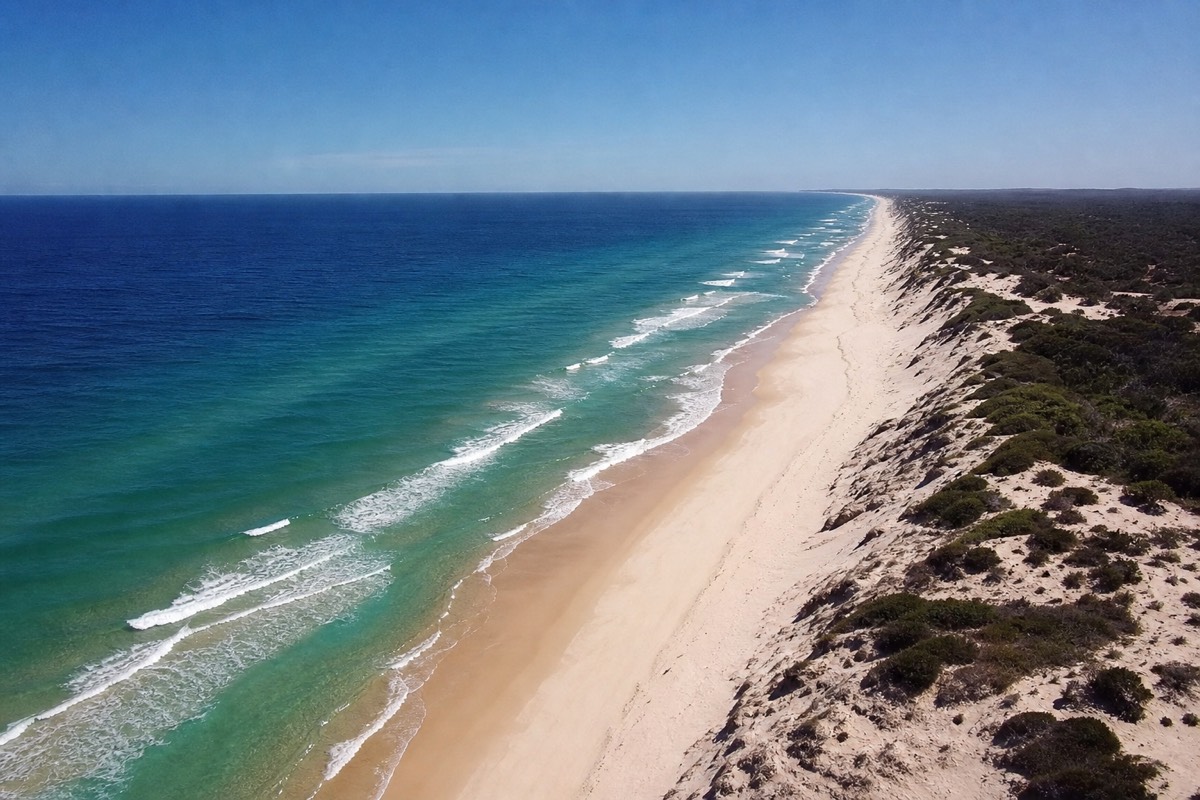
Queensland's wet season broadly overlaps with summer (roughly December to March), bringing higher humidity and a greater chance of rain or storm activity than the drier winter months. This doesn't cancel tours outright, but it's worth knowing if you're choosing between summer's warm water and winter's more settled, drier conditions.
Best Time By Activity
| Priority | Best window |
|---|---|
| Whale watching | June-October, peak August-September |
| Snorkeling/calm water | December-February |
| Dugong sightings | September-November |
| Avoiding crowds | March-May or September-November |
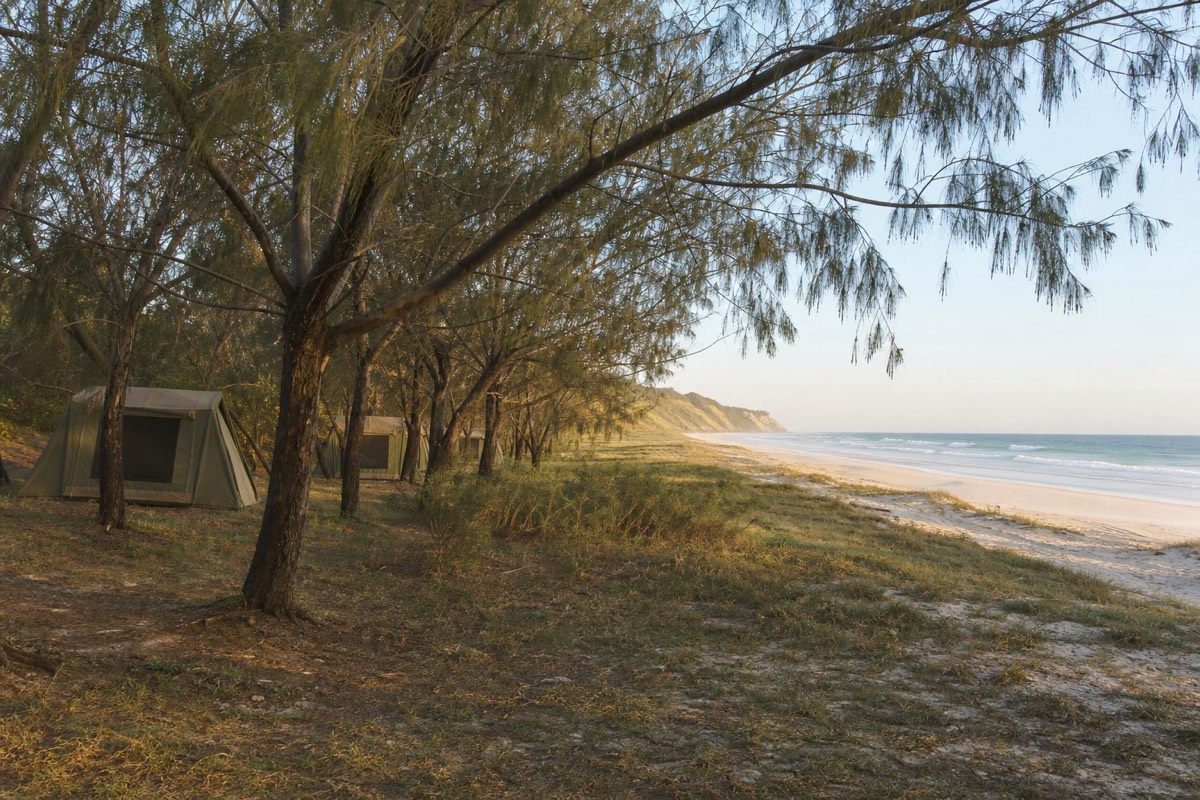
| Camping comfort (cooler, drier) | April-October |
A Full Month-By-Month Scorecard
| Month | Water/weather | Crowds | Notable wildlife |
|---|---|---|---|
| January | Hot, calm, very warm water | Very high | Turtles |
| February | Hot, calm, warm water | Very high | Turtles |
| March | Cooling, stable | Moderate, easing | Dolphins active |
| April | Mild, clear | Moderate (school holidays vary) | Dolphins active |
| May | Mild, stable | Low-moderate | Dolphins active |
| June | Cooler, clear | Low | Whale migration begins |
| July | Cool, clear aerial visibility | Low-moderate (school holidays) | Whales building |
| August | Cool, settled seas | Low-moderate | Peak whale season |
| September | Warming, pleasant | Low-moderate | Peak whale, dugong window opens |
| October | Warming | Moderate | Late whales, dugongs |
| November | Warm, building toward summer | Moderate | Dugong window closing |
| December | Hot, humid, wet season begins | High, rising toward peak | Turtle season builds |
How Does Price Change Through The Year?
Tour prices and ferry demand both track the same curve as crowds: December-February commands the highest prices and least availability, while the April-to-October shoulder and winter months generally offer easier booking and, on some operators' listings, lower seasonal pricing. Booking a few weeks ahead matters far more in peak season than in the quieter months, when short-notice availability is usually still workable.
Choosing A Date Around A Specific Goal
- Want the best whale odds: target the last two weeks of August or first two weeks of September
- Want the calmest, warmest water for snorkeling: late January or February, and accept the crowds
- Want to avoid crowds entirely: a weekday in May or October
- Planning a camping trip: April to October for more comfortable overnight conditions
- Want dugong sightings specifically: September through November, ideally on a naturalist-guided tour
What About School Holidays And Public Holidays?
Queensland school holidays and long weekends add a crowd and price spike on top of the underlying seasonal pattern, even in shoulder months that would otherwise be quiet, so check the school holiday calendar alongside the seasonal advice above before locking in a date. A shoulder-season weekday that happens to fall inside a school holiday period will feel closer to peak-season conditions than the month alone suggests.
Still Deciding Whether The Trip Is Worth It At All?
If timing is only part of your hesitation, see our honest take on whether Moreton Island is worth visiting, or how it stacks up against North Stradbroke Island and K'gari (Fraser Island) if you're weighing up which Queensland sand island to prioritise.
How Does The Ferry Crossing Itself Feel Across The Seasons?
Moreton Bay is largely sheltered, so the crossing rarely gets genuinely rough, but wind chop builds more often in the shoulder and winter months than during the settled summer stretch, which is worth knowing if you or a travel companion is prone to seasickness. See our ferry guide for practical seasickness advice that applies on any crossing, regardless of season.
| Season | Typical crossing conditions |
|---|---|
| Summer (Dec-Feb) | Generally settled, occasional afternoon storm activity |
| Autumn (Mar-May) | Stable, among the calmest crossing conditions of the year |
| Winter (Jun-Aug) | Cooler, occasional wind chop; whale sightings possible during the crossing |
| Spring (Sep-Nov) | Warming, occasionally breezier crossings |
How Far Ahead Should You Book, Month By Month?
| Travel window | Recommended booking lead time |
|---|---|
| December-February, school holidays, long weekends | Several weeks to months ahead |
| August-September (peak whale season) | 2-4 weeks ahead for the best tour availability |
| Regular weekends, shoulder months | 1-2 weeks ahead |
| Weekday, off-peak (Apr-Jul, Oct) | A few days ahead is often enough |
Best Season For Each Of The Island's Landmarks, At A Glance
| Landmark | Best season |
|---|---|
| Tangalooma Wrecks | Dec-Feb for warmest water; year-round for wildlife |
| Cape Moreton Lighthouse | Jun-Oct for whale watching from the headland |
| Champagne Pools | Apr-Oct for more settled swell and conditions |
| Camping zones | Apr-Oct for cooler, drier overnight comfort |
| Mount Tempest | Jun-Aug for the most comfortable climbing conditions |
| Dugong sightings | Sep-Nov for the strongest window |
Does The Day Of The Week Matter As Much As The Season?
Within any given season, weekdays are consistently quieter than weekends at the main Tangalooma sites, and this effect can matter more than a small seasonal shift, meaning a quiet shoulder-season weekend can still feel busier than a peak-season weekday. If avoiding crowds is your top priority, check both the calendar month and the day of the week before locking in a date, not just one or the other.
What Do First-Time Visitors Most Often Get Wrong About Timing?
The most common mistake is treating "summer" as automatically the best time, without weighing the crowds and prices that come with it; a close second is booking a shoulder-season date that happens to fall inside Queensland school holidays, which quietly pushes crowd levels back up toward peak-season territory. A third: assuming whale season means whales are visible from every part of the island equally, when land-based sightings are meaningfully better from the exposed northern headlands than from the sheltered Tangalooma side.
What Does Booking Flexibility Look Like Across The Seasons?
Most of the tours listed on this site show their current free-cancellation window directly on the live GetYourGuide or Viator listing, and that flexibility matters more in peak season, when a change of plans is harder to rebook, than in the quieter months, when last-minute availability is usually still workable. In practice this means shoulder-season travellers can afford to hold off and watch the weather forecast before committing, while anyone booking a fixed December-February date benefits from locking in early and treating the listing's cancellation terms as real insurance against a change of plans.
The same logic applies to the ferry side of the trip if you're arranging it independently rather than through a tour. A shoulder-season MICAT sailing is rarely full enough to worry about, but a peak-week departure booked at the last minute can simply not have room left, which is a harder problem to solve on the day than a cancelled activity.
Is It Worth Visiting Twice, Once For Whales And Once For Warm Water?
For Brisbane-based travellers or anyone visiting Queensland more than once, splitting the experience across two trips, an August or September visit for the whale migration and a January or February visit for calm, warm-water snorkeling, genuinely captures two different versions of the same island rather than compromising on one shoulder-season date that does neither particularly well. This isn't necessary for a single visit, where September remains the strongest all-round compromise, but it's a real pattern among repeat visitors who have the flexibility to come back.
| Visit | Best window | What you get that the other misses |
|---|---|---|
| Winter/whale trip | Aug-Sep | Best whale odds, lower crowds, cooler comfortable hiking |
| Summer/water trip | Jan-Feb | Warmest water, calmest seas, longest daylight |
A single visitor forced to choose one still does well with either choice; it's only the "which is objectively better" framing that breaks down once you realise the two trips are optimised for genuinely different things.
How Does The Wildlife Calendar Line Up With The Weather Calendar?
The two calendars only partly overlap: the calmest, warmest water for snorkeling (December-February) is also turtle season, while the best whale-watching window (August-September) sits in cooler, drier conditions with lower crowds, meaning wildlife priorities alone can point you toward either end of the year depending on which species you actually want to see. See our Moreton Bay Marine Park and wildlife guide for the fuller species-by-species seasonal breakdown this summary draws from.
| Priority | Weather window | Wildlife window | Do they align? |
|---|---|---|---|
| Warmest water for snorkeling | Dec-Feb | Turtle season | Yes, both peak together |
| Whale watching | Jun-Oct, cooler | Peak Aug-Sep | Yes, both peak together |
| Dugong sightings | Sep-Nov, warming | Strongest window Sep-Nov | Yes, both peak together |
What If You're Travelling From Overseas And Can't Easily Pick A Specific Week?
International visitors locking in flights months ahead should anchor the decision to season rather than a specific week: choosing "August or September" for whale watching or "January or February" for calm water still delivers the intended experience even without knowing the exact date, since these windows are wide enough to absorb normal trip-planning uncertainty. The one thing worth checking once your dates firm up is whether they land inside Queensland school holidays, which can push a shoulder-season week's crowd levels closer to peak-season territory regardless of the month.
Does The Time Of Day Matter As Much As The Time Of Year?
Within any single visit, the hour you arrive can matter more than the month you chose: an early first-ferry arrival puts you at the wrecks and beaches ahead of the crowd on almost any date, while a late-morning arrival in December feels busier than an early-morning arrival in July regardless of the season's underlying popularity. Treat month and time of day as two separate levers rather than one, since a well-timed day within a "worse" month can genuinely beat a poorly-timed day within a "better" one.
Stack both levers deliberately if you can: a shoulder-season weekday with an early-ferry arrival is about as quiet as Moreton Island gets at any point in the calendar, while a peak-season weekend with a late arrival is close to the busiest combination possible. Most other outcomes sit somewhere between those two extremes.
The One-Line Version, For Anyone Skimming
September for the best all-round balance, January-February for the warmest water and biggest crowds, August-September for the best whale odds, and any shoulder-season weekday for the quietest possible island.
So When Should You Book?
Match the month to your priority rather than chasing a single universal "best" time: whale watchers should aim for August-September, snorkelers who want the calmest water should target January-February and accept the crowds, and anyone who values a quieter island over either of those should look at the shoulder seasons instead.