Moreton Island Ferry Guide: Micat Vs Tangalooma Flyer, Cost And Timetable (2026)
Moreton Island has no bridge, no airport and no road connection to the mainland, so every visit starts with a boat. Which one you book decides whether you arrive with your own 4WD, spend the crossing on a resort catamaran, or skip the whole logistics puzzle inside a tour package. Here is the real cost, the timetable and the trade-offs.
Trip planning note: prices, permits, timetables and historical ratings below are estimates or background examples, not current booking quotes. Use the provider calendar for the selected departure and confirm all mandatory fees.
A bundled cruise can combine the crossing and activities, but departure wharves differ. Check the terminal before arranging transport. Explore Moreton Wrecks And Wildlife Cruise
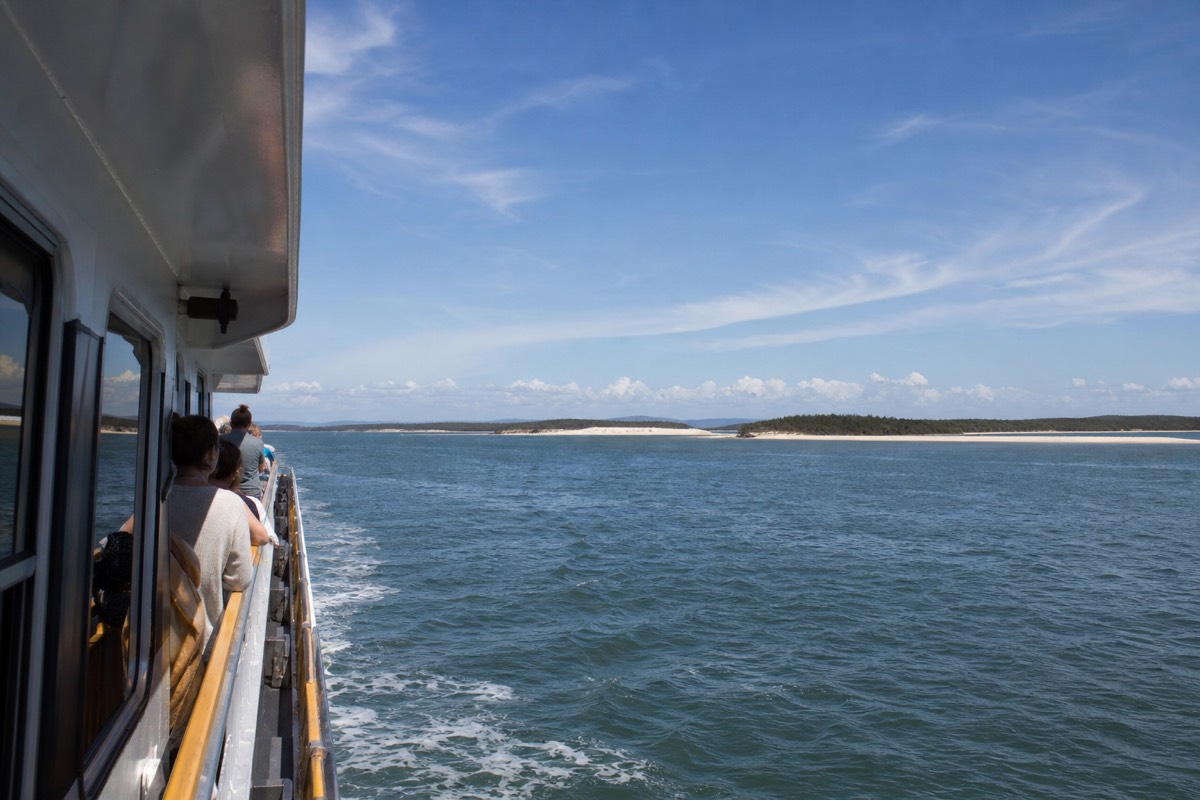
Every question about visiting Moreton Island eventually comes back to the same starting point: how do you actually get there. There is no way to drive, fly or walk onto the island, so the ferry choice sets the shape of the whole day, from what time you can realistically arrive to whether you need your own vehicle once you land.
Getting to Moreton Island: the four ways compared
Costs are approximate return fares per adult, 2026. Confirm the live fare on the operator's own booking page before you travel.
The Quick Answer
Most independent travellers bringing a 4WD use the MICAT vehicle ferry from the Port of Brisbane, around $80-120 return per adult for around 75-90 minutes each way. Resort-bound and day-tour passengers travel on the Tangalooma Flyer or an operator's own catamaran instead. If you don't want to think about any of it, a guided day tour bundles the ferry, the 4WD and a guide into one ticket, which is the simplest option for a first visit.
What Are The Ferry Options To Moreton Island?
There are four realistic ways across: the MICAT vehicle ferry, the Tangalooma Flyer passenger catamaran, an operator's own tour transfer, and a private charter boat. No commercial airline serves the island, so all four are boat-based, and the choice comes down to whether you're bringing a vehicle and how much you want organised for you.
The MICAT ferry is the main public option and the only one that carries vehicles. It departs the Port of Brisbane and lands at Tangalooma or the Wrecks area, running multiple sailings a day. The Tangalooma Flyer is a passenger-only catamaran that runs from Holt Street Wharf in Pinkenba to Tangalooma Island Resort, mainly for resort guests and day-cruise passengers rather than independent 4WD travellers. Several tour operators run their own transfer, departing from marinas like Rivergate in Murarrie, bundled straight into the tour price. And a private charter from Manly Harbour or Scarborough is the fastest but most expensive way across, mostly used by small groups wanting flexibility.
Micat Vs Tangalooma Flyer: Which One Do You Need?
Take the MICAT vehicle ferry if you're bringing your own 4WD to drive the island's sand tracks; take the Tangalooma Flyer if you're staying at the resort or joining a day cruise that already includes it. They solve different problems, so the comparison is really about what you're doing once you land, not which is objectively better.
| MICAT vehicle ferry | Tangalooma Flyer | |
|---|---|---|
| Carries vehicles | Yes, 4WD only (soft sand) | No, passengers only |
| Departs from | Port of Brisbane | Holt Street Wharf, Pinkenba |
| Lands at | Tangalooma / The Wrecks | Tangalooma Island Resort |
| Crossing time | ~75-90 minutes | ~75 minutes |
| Best for | Self-drive 4WD travellers | Resort guests, day-cruise bookings |
| Return cost (adult) | ~$80-120 with a vehicle; ~$60-90 passenger-only | ~$80-100 |
How Much Does The Ferry To Moreton Island Cost?
Budget roughly $60-90 return as a foot passenger, or $80-120 return if you're bringing a 4WD, on the MICAT service; the Tangalooma Flyer runs a similar $80-100 return. Fares move with season and how far ahead you book, so treat these as planning figures rather than a quote.
A private charter changes the maths completely: expect $300-600 or more for a small-group return trip from Manly Harbour or Scarborough, which only makes sense split across a group that wants the fastest crossing and full control of timing. At the other end, a guided Moreton Island day tour often works out cheaper per person than doing it yourself, because the ferry, the 4WD, fuel, a guide and usually lunch are all one price, and operators buy ferry capacity at volume.
| Traveller type | Typical return cost |
|---|---|
| Foot passenger, MICAT | ~$60-90 |
| 4WD + driver, MICAT | ~$80-120 |
| Tangalooma Flyer, passenger | ~$80-100 |
| Private charter, small group | ~$300-600+ |
| Guided day tour (ferry included) | From ~$136 per person |
What Is The Ferry Timetable, And Is There A Cheapest Day To Go?
MICAT runs multiple sailings daily, generally between about 7:00am and 4:00pm, with more frequent departures from December to April. There is no single published "cheapest day," but weekday sailings are consistently quieter and easier to book than weekend departures, especially in school holidays.
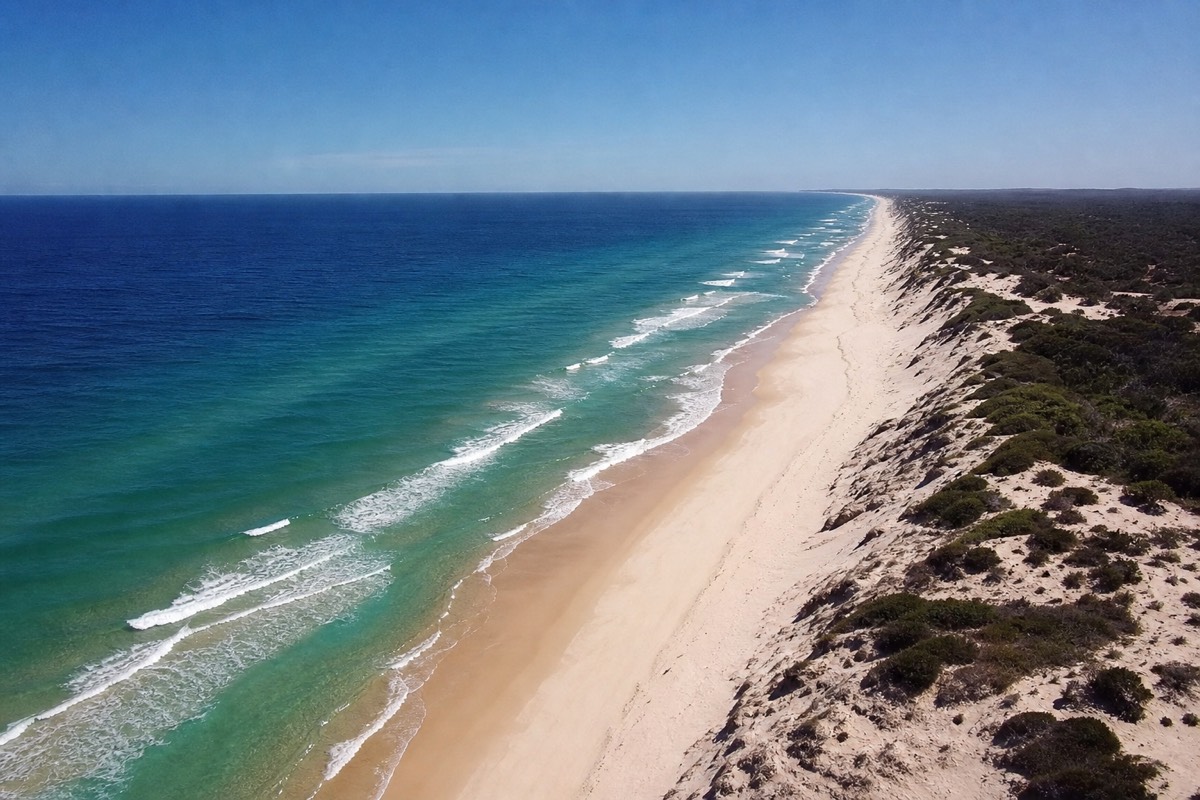
First light departures matter for more than cost. The earliest sailing gets you on the island before the day-tripper wave, which means quieter beaches at the Tangalooma Wrecks and first pick of a good campsite if you're staying overnight. Return sailings typically run through the afternoon, with the last services back to Brisbane around 3:00pm to 5:00pm, so plan your day around a real cutoff rather than assuming a late boat will be there.
Where Do The Different Ferries Actually Depart From In Brisbane?
MICAT departs the Port of Brisbane; the Tangalooma Flyer leaves from Holt Street Wharf in Pinkenba; and several day-tour operators run from Rivergate Marina in Murarrie instead. These are three different points around Brisbane's river and bay, so check your booking confirmation rather than assuming they share a terminal.
| Service | Departure point |
|---|---|
| MICAT vehicle ferry | Port of Brisbane |
| Tangalooma Flyer | Holt Street Wharf, Pinkenba |
| Tangalooma quad bike & helicopter tour | 220 Holt St, Pinkenba (9am check-in typical) |
| Dolphin watching & snorkel cruise | Rivergate Marina, Murarrie (9am check-in typical) |
Arrive 15 to 20 minutes before departure on any of these services. Boarding is faster than an airport, but a missed sailing on a day trip usually means the whole day's plan collapses, since there is no quick way to catch up once the boat has left.
Can I Bring A Car, And Do I Need A 4Wd Once I'm There?
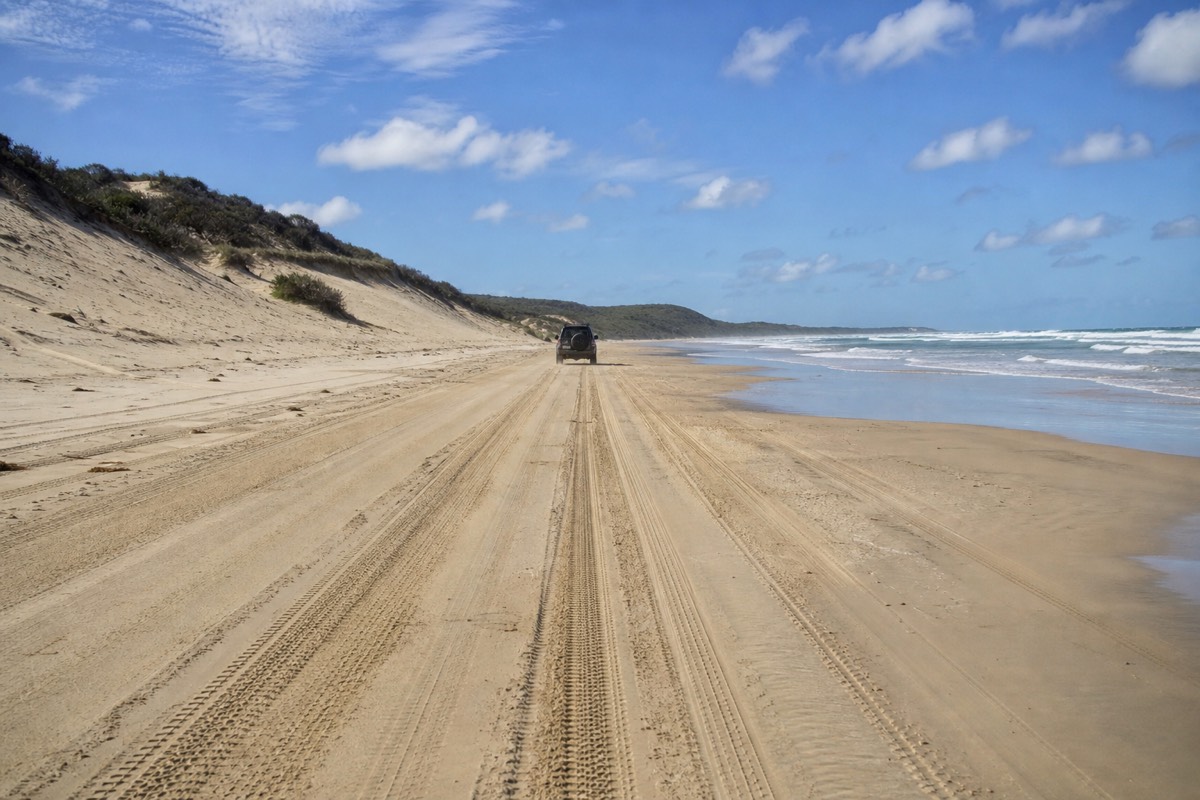
Yes, the MICAT ferry carries vehicles, but only 4WDs, because every road on Moreton Island is soft, unsealed sand. A standard two-wheel-drive car will not be accepted and would get stuck within a few hundred metres of the landing point regardless.
If you don't own a 4WD, you have three real choices: hire one on the island or in Brisbane before you cross (roughly $150-300 a day plus fuel), join a guided day tour where the vehicle and driver are already sorted, or travel as a foot passenger and stick to Tangalooma's walkable resort area rather than the beach highway. See our 4WD permits and routes guide for the full detail on driving the island yourself.
Can I Get To Moreton Island Without A Car At All?
Yes. Foot passengers travel on the MICAT or Tangalooma Flyer without any vehicle, and every guided day tour on this site already includes the crossing and the 4WD, so the practical answer for most first-time visitors is to book a tour rather than manage a vehicle ferry booking yourself.
This is genuinely the more common way to visit. Going car-free removes the two hardest parts of a DIY Moreton Island trip: driving on sand you may never have handled before, and getting a 4WD onto the vehicle ferry in the first place. It trades a small amount of flexibility for a day that runs on someone else's logistics instead of yours. Our DIY vs tour comparison walks through this decision in more depth.
Common Mistakes When Booking The Ferry
The three avoidable errors: booking a passenger-only Tangalooma Flyer ticket when you actually need to bring a 4WD, cutting arrival time too close on a peak-season weekend, and assuming a late return sailing will be available without checking the timetable first.
A quieter but real fourth mistake: bringing a rented 4WD you have never driven on sand, then finding out at the ramp that MICAT's crew requires basic beach-driving readiness (tyre pressure down, no low-clearance rentals) before boarding. If that sounds like more to manage than you want on a single day trip, it is the strongest argument for a guided tour, where none of it is your problem.
What Does A Typical Ferry-Day Itinerary Actually Look Like?
Most day trips follow the same rhythm regardless of which ferry you take: an early departure from Brisbane, a mid-morning arrival on the island, six to eight hours of activities, and a mid-to-late-afternoon return crossing, giving a genuine full day rather than a rushed half one. Working through the timing helps explain why the first sailing matters so much more than it looks on a timetable.
| Time | What's happening |
|---|---|
| 6:45am-7:15am | Check-in at the terminal (arrive 15-20 minutes before departure) |
| 7:00am-8:00am | First sailing departs Brisbane |
| 8:30am-9:30am | Arrival on Moreton Island, ahead of the day-tripper wave |
| 9:30am-3:30pm | Wrecks, dunes, beach time, wildlife spotting, lunch |
| 3:00pm-5:00pm | Return sailings depart the island |
| 5:00pm-7:00pm | Back in Brisbane |
Skip the first sailing and every one of these blocks shifts later, which is the real reason operators push an early check-in so hard: it isn't about punctuality for its own sake, it's about protecting the six-to-eight-hour activity window that makes the day worth the crossing.
What Happens If You Miss Your Booked Sailing?
On the MICAT vehicle ferry, a missed sailing usually means waiting for the next available departure and, on a busy day, the possibility that it's already fully booked; on a guided tour, missing the group's designated departure typically means missing the tour entirely, since the group and vehicle move together. Neither situation is actually catastrophic if you build in a margin, but neither is easily fixed on the day either, which is why 15 to 20 minutes of buffer before your check-in window is worth more than it costs you in lost sleep.
| Scenario | Likely outcome | How to avoid it |
|---|---|---|
| Miss MICAT sailing, off-peak weekday | Usually room on the next sailing | Still costs you 1-2 hours of island time |
| Miss MICAT sailing, peak weekend/holiday | Next sailing may be fully booked | Book the earliest realistic departure, not the latest |
| Miss a guided tour's departure | Typically no substitute, tour proceeds without you | Arrive at least 20 minutes early; confirm the exact meeting point the night before |
Seasickness And Rough-Water Crossings: What To Actually Expect
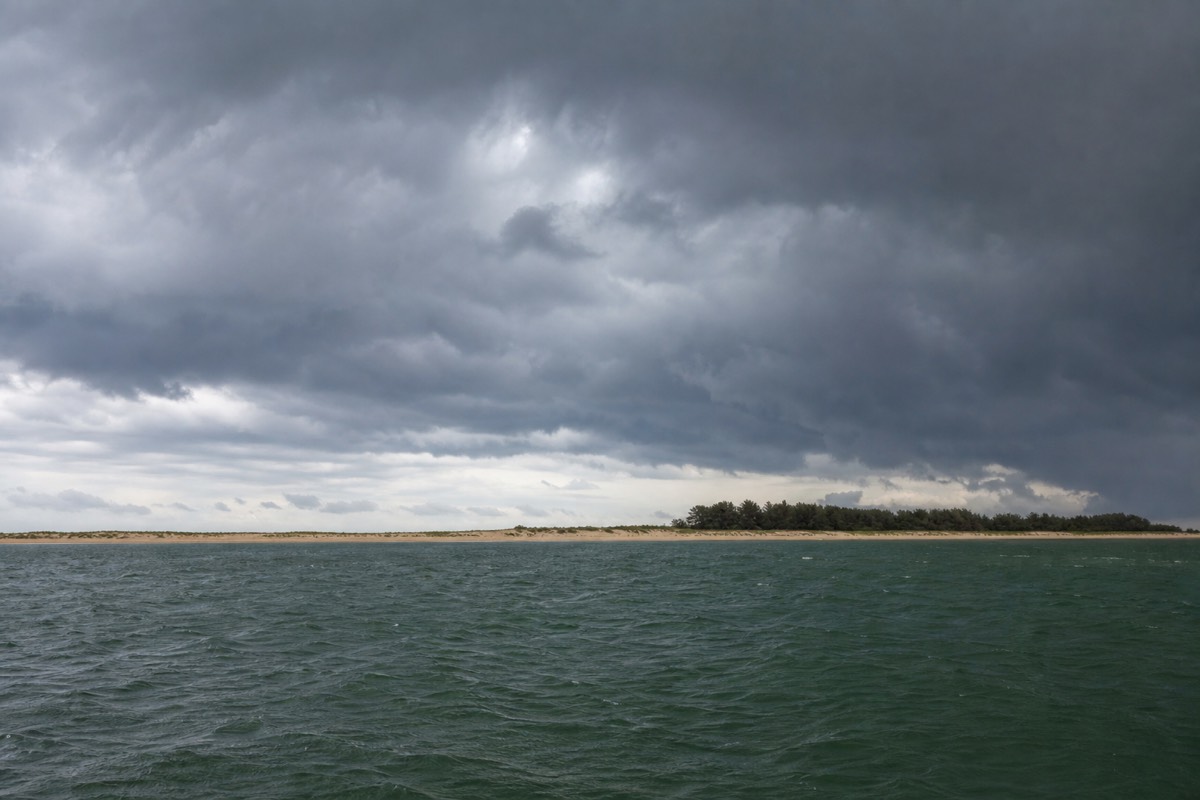
Moreton Bay is largely sheltered water, so the crossing is generally calmer than an open-ocean ferry, but wind chop still builds on blustery days, and anyone prone to seasickness should sit centrally, face forward, and consider taking motion-sickness medication before boarding rather than after symptoms start. The open-deck sections tend to feel more stable than an enclosed cabin for anyone sensitive to motion, since having a fixed horizon in view genuinely helps.
- Take any seasickness medication at least 30-60 minutes before departure, not once you're already queasy
- Sit toward the centre of the vessel and as low as practical; motion is more pronounced at the bow and on upper decks
- Keep your eyes on the horizon rather than a phone screen during choppier stretches
- Eat something light beforehand; travelling on an empty stomach tends to make motion sickness worse, not better
Ferry Vs A Guided Tour Transfer: The Honest Cost Comparison
Booking MICAT independently and then arranging your own activities on the island can come out cheaper per person for a large group splitting a 4WD hire, but for a solo traveller or couple, a guided tour's bundled transfer, activities and often lunch frequently works out similar in price or cheaper than piecing the day together yourself. The comparison only really favours the DIY ferry route once you're already committed to self-driving, since the ferry fare alone isn't where the DIY savings (or costs) actually show up; see our full Moreton Island cost breakdown for the complete picture across both approaches.
Booking Tips That Actually Save You Money Or Hassle
- Book the MICAT ferry online ahead of time rather than turning up on the day, especially in the December-April peak window when sailings run more frequently but also fill faster
- Weekday sailings are consistently easier to book than weekend and school-holiday departures
- If you're travelling with a 4WD, confirm the vehicle meets MICAT's basic sand-driving requirements before you arrive, not at the ramp
- For a first visit, a guided tour's bundled ferry ticket removes an entire decision (which ferry, what time, from where) from your planning list
For the full picture of how ferry, tour and DIY costs actually compare, see our Moreton Island cost breakdown.
What Happens If The Ferry Is Delayed Or Cancelled By Weather?
Ferry operators reserve the right to delay or cancel sailings in genuinely rough weather, since Moreton Bay, while largely sheltered, can still see conditions unsafe for crossing on a bad day; this is uncommon but not impossible, so build a small buffer into any tightly connected travel plans (a same-day flight home, for instance) rather than scheduling back to back with zero margin. If you're booking a guided tour, the operator typically handles rebooking directly; if you've booked MICAT or the Tangalooma Flyer independently, check their own weather policy at the time of booking.
How Does Moreton's Crossing Compare With The Ferry To North Stradbroke Island?
Moreton's 75-90 minute crossing is meaningfully longer than the roughly 25-45 minute crossing to North Stradbroke Island from Cleveland, which is worth factoring in if crossing time itself, rather than the destination, is your deciding concern. See our Moreton Island vs North Stradbroke Island guide for the fuller comparison beyond just the ferry.
| Moreton Island | North Stradbroke Island | |
|---|---|---|
| Crossing time | ~75-90 minutes | ~25-45 minutes |
| Vehicle ferry available | Yes, MICAT | Yes, vehicle barge service |
So Which Ferry Should You Book?
If you own or have hired a proper 4WD and want to explore independently, MICAT is the only vehicle option and the one to book. If you're heading straight to Tangalooma Resort without a vehicle, the Tangalooma Flyer is built for exactly that. And if you would rather not manage a ferry booking, a vehicle permit and sand driving all in the same day, a guided Moreton Island tour folds the crossing into a single ticket and gets you on the island with nothing left to organise. Not sure which tour actually suits you best? See our roundup comparing all the main Moreton Island tours side by side.