Tangalooma Wrecks: The Complete Snorkeling Guide
Fifteen ships sit in shallow water just off Tangalooma, close enough to swim to from the beach, and together they form one of the most accessible snorkeling sites near Brisbane. This guide covers the history, what actually lives there, when to go, and how to get in the water safely.
Trip planning note: prices, permits, timetables and historical ratings below are estimates or background examples, not current booking quotes. Use the provider calendar for the selected departure and confirm all mandatory fees.
Compare the guided water session, supplied equipment and departure point; a wildlife cruise and a dune adventure organise the day differently. Explore Moreton Wrecks And Wildlife Cruise
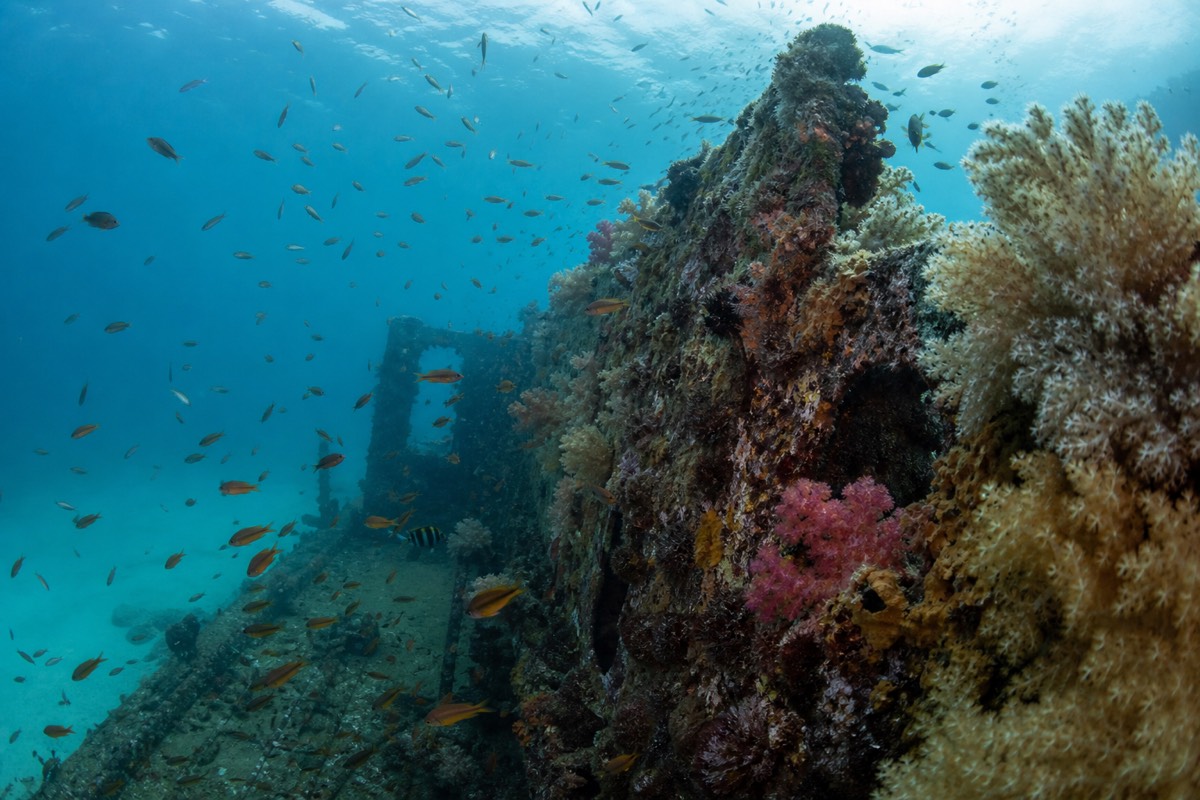
The Tangalooma Wrecks are the single biggest reason most people book a Moreton Island trip in the first place. Fifteen vessels, deliberately sunk from 1963 onward to build a safe small-boat anchorage, now sit in a curved line in shallow water and have grown into an artificial reef thick enough to feel like a real dive site, without needing a dive certification to see it.
The Tangalooma Wrecks at a glance
Figures compiled from the operators' own published tour descriptions and the site's tour listings, 2026.
The Quick Answer
The wrecks sit in shallow, sheltered water just off Tangalooma Beach, shallow enough to snorkel straight from the shore in calm conditions. Expect tropical fish, wobbegong sharks resting on the wreck hulls, and the occasional turtle or ray. Guided tours provide gear, briefing and supervision; confident swimmers can also snorkel independently at low tide when conditions are calm.
What Are The Tangalooma Wrecks, And Why Are They There?
The Tangalooma Wrecks are 15 vessels, mostly old dredges, barges and small ships, deliberately scuttled in a curved line in shallow water off Tangalooma from 1963 onward to create a breakwater and safe small-boat anchorage. The plan worked twice over: boats got their calm anchorage, and the sunken hulls slowly grew into a reef.
Decades of coral growth, sponge and algae have colonised the steel and timber hulls, and the fish followed. What began as a practical harbour project is now marketed as one of the easiest artificial-reef snorkeling sites in Queensland, precisely because the water is shallow and sheltered rather than open ocean.
What Will You Actually See Snorkeling The Wrecks?
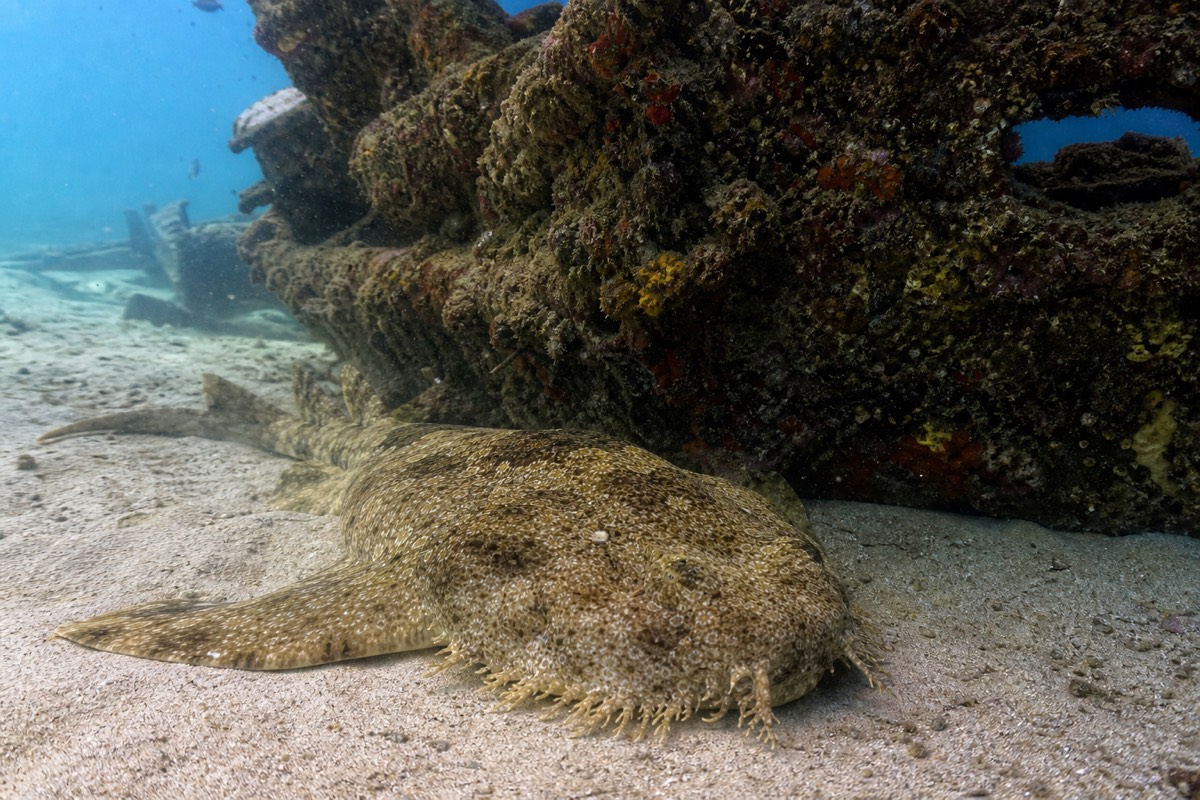
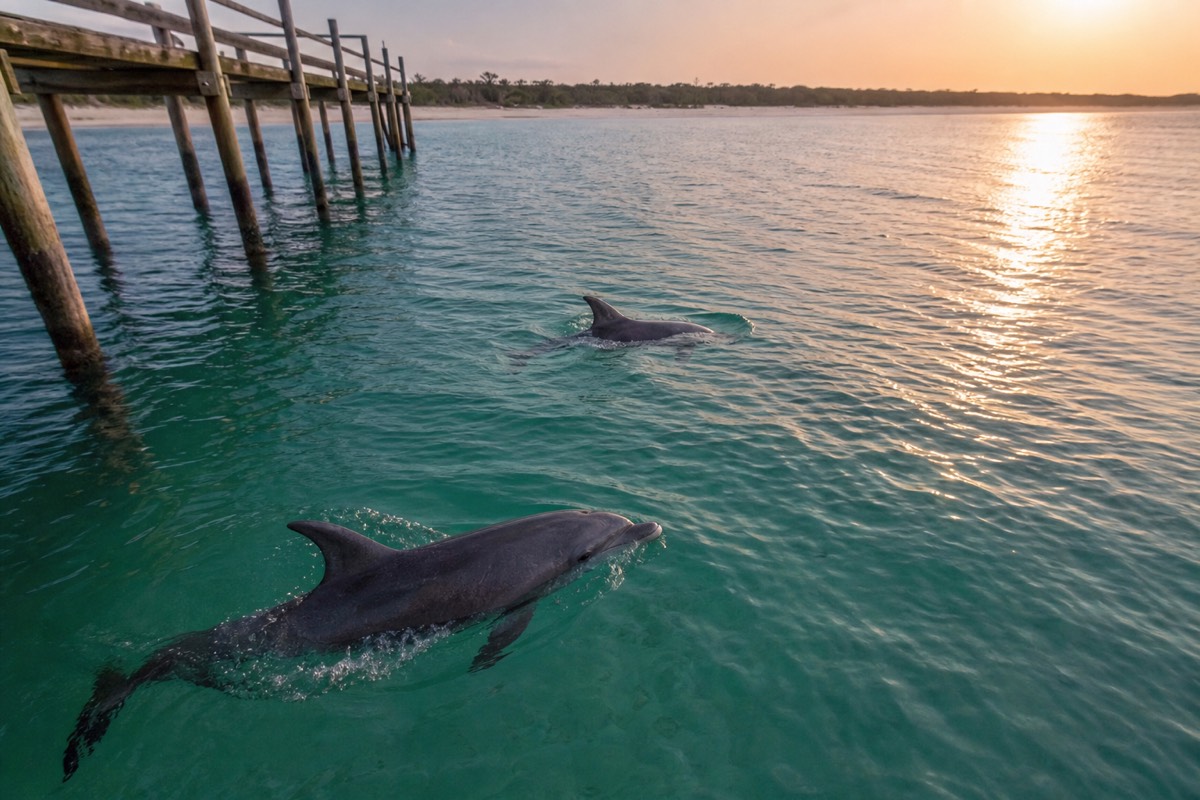
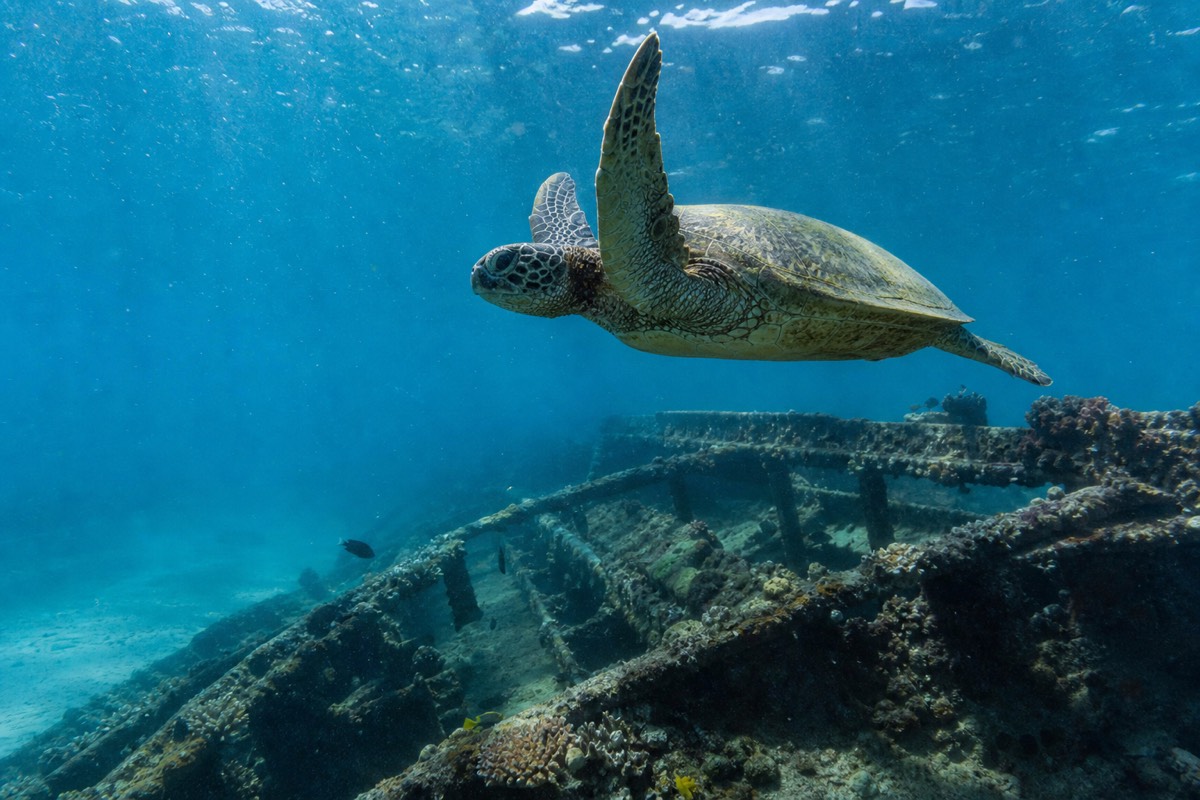
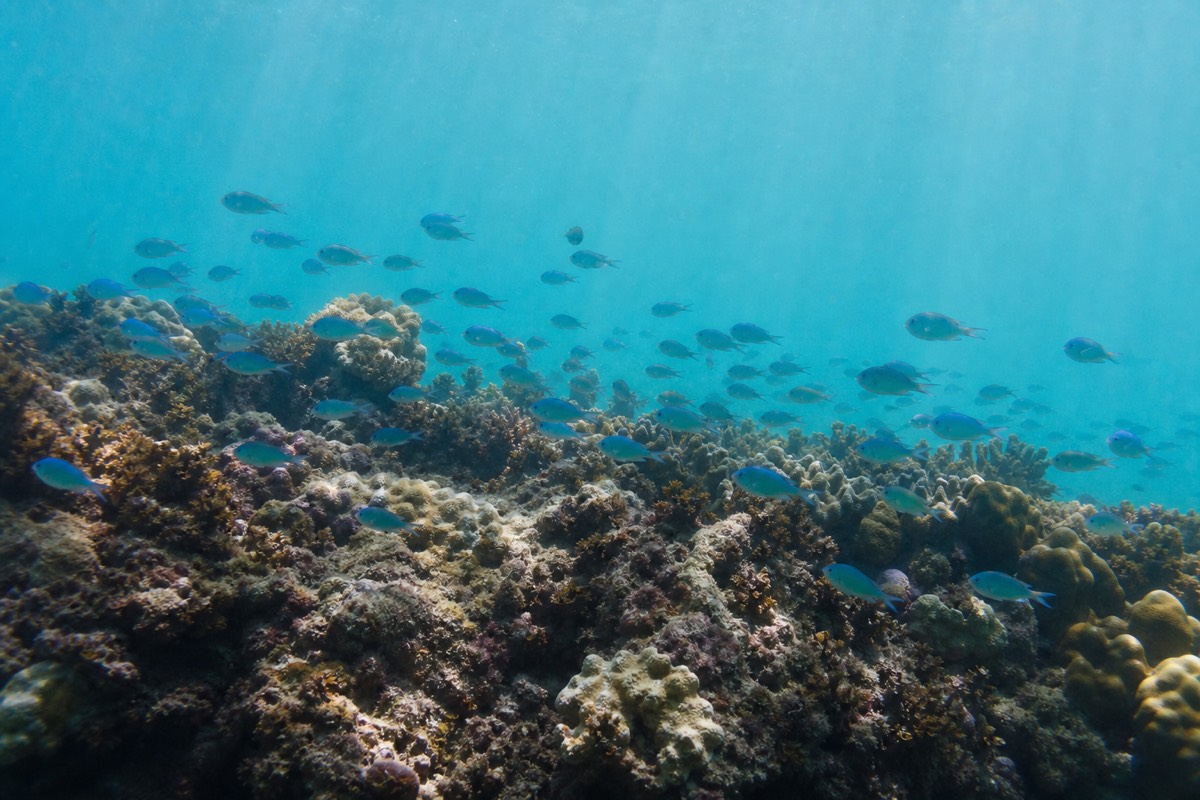
Expect dense schools of small tropical reef fish around the hulls, wobbegong sharks resting motionless on the wreck structure or seabed, and regular sightings of green turtles and rays; dolphins and dugongs are sometimes visible from the surface nearby but are not guaranteed on any single visit.
| Species | How likely | Notes |
|---|---|---|
| Tropical reef fish (200+ species recorded) | Very likely | Dense schools directly around the hulls |
| Wobbegong sharks | Likely | Bottom-dwelling, camouflaged, generally harmless if not provoked |
| Green turtles | Common | Often seen grazing near the wrecks or passing through |
| Rays | Common | Usually resting on the sandy bottom between hulls |
| Bottlenose dolphins | Occasional | More often seen from the boat than while snorkeling |
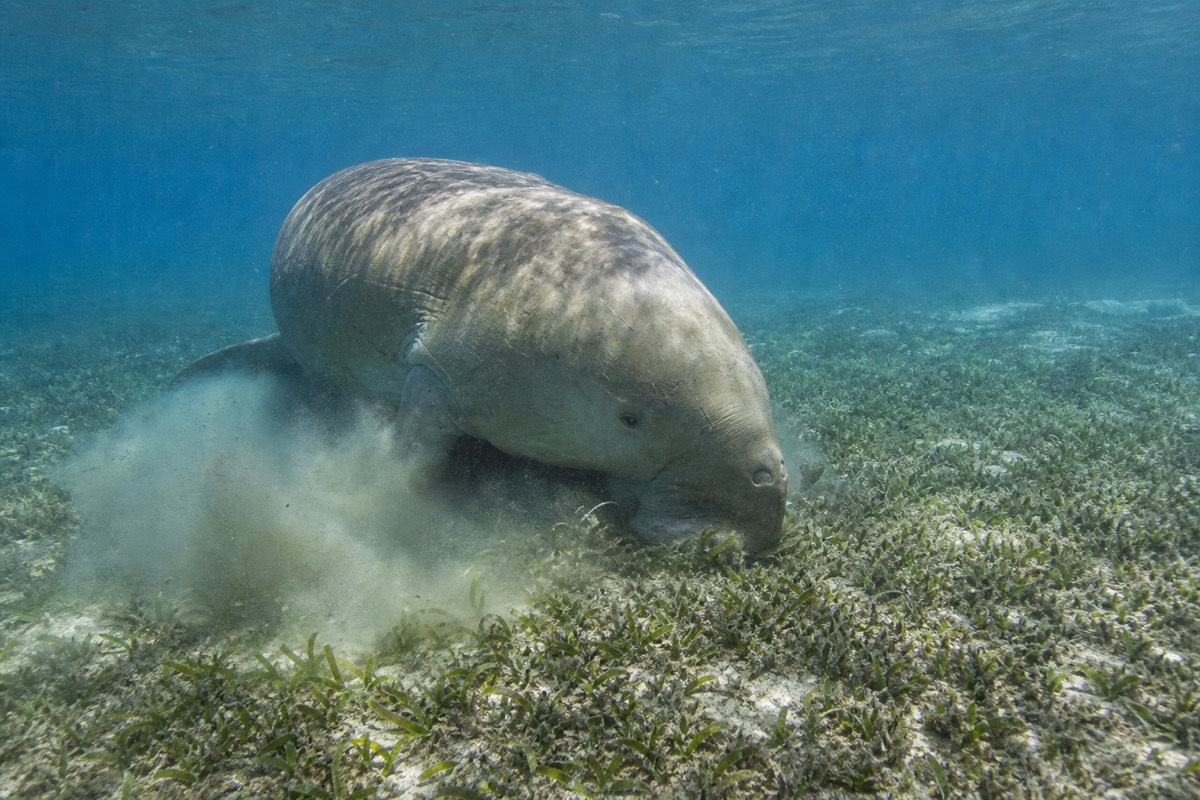
| Dugongs | Occasional, seasonal | Best chance September to November, see our marine park and wildlife guide |
Are There Sharks At The Tangalooma Wrecks?
Yes, wobbegong sharks are a regular and expected sighting, resting camouflaged on the wreck hulls or the sandy bottom. They are a bottom-dwelling species, not open-water hunters, and pose minimal risk to snorkelers who don't handle or step on them. We cover this specific question, including safety practice around them, in a dedicated sharks at the Tangalooma Wrecks answer.
What's The Visibility And Water Depth Like?
The wrecks sit in shallow water, generally in the range of 2 to 4 metres, shallow enough that snorkelers can see the hulls clearly from the surface in good conditions. Visibility is strongest early in the day and on calm, low-wind mornings, before the typical afternoon sea breeze stirs up the sandy bottom and thins the clarity.
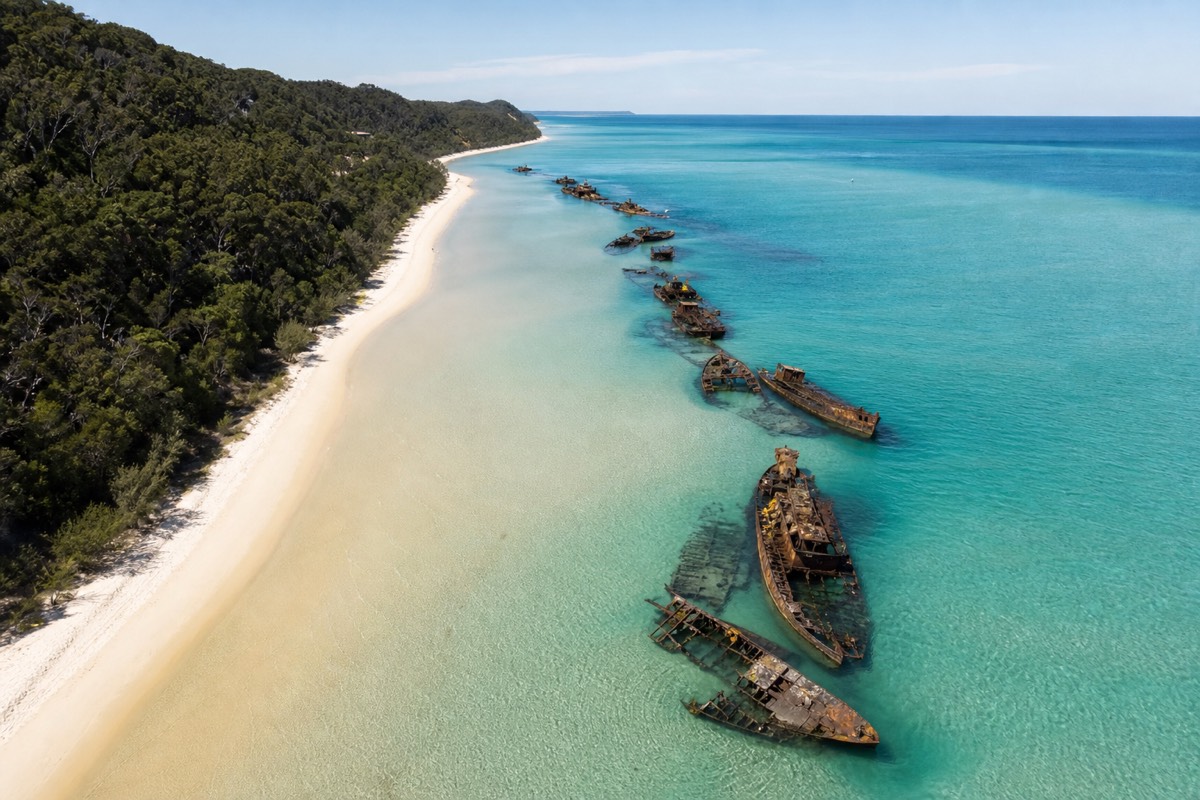
Tides matter more than most visitors expect. Around low tide, some wreck sections sit close enough to the surface to snorkel comfortably from the beach; at higher tide the same swim is longer and the current through the gaps between hulls picks up. If you're planning a self-guided visit rather than a boat-based tour, check the tide window before you get in.
Guided Snorkeling Vs Going It Alone
A guided tour supplies snorkel gear, a safety briefing, and a guide who knows the current wreck conditions, and is the easier option for first-timers or anyone unsure about currents; snorkeling independently from the beach works well for confident swimmers who time it around low tide and calm weather. We compare both paths properly, including cost and gear logistics, in solo vs with a guide.
| Guided tour | Self-guided from the beach | |
|---|---|---|
| Gear | Provided | Bring your own mask, snorkel, fins |
| Safety | Guide present, briefed on conditions | Your own judgement on tides/currents |
| Cost | Bundled into the tour price | Free once you're on the island |
| Best for | First-timers, families, less confident swimmers | Confident swimmers who know the tide window |
What Should You Bring?
If you're snorkeling independently: your own mask, snorkel and fins, reef-safe sunscreen applied well before you get in the water, a rash vest for sun and stinger protection, and reef shoes for walking over the sandy shallows. On a guided tour, gear and safety equipment are typically supplied, so check your specific tour's inclusions before packing your own.
What's The Best Time Of Year And Day To Snorkel The Wrecks?
Morning sessions in calm weather give the clearest water; across the year, the December-to-February window brings the warmest water and best underwater clarity, while a dugong-sighting window opens roughly September to November. See our best time to visit guide for the full seasonal breakdown.
Can You Kayak Or Paddleboard Over The Wrecks Instead Of Swimming?
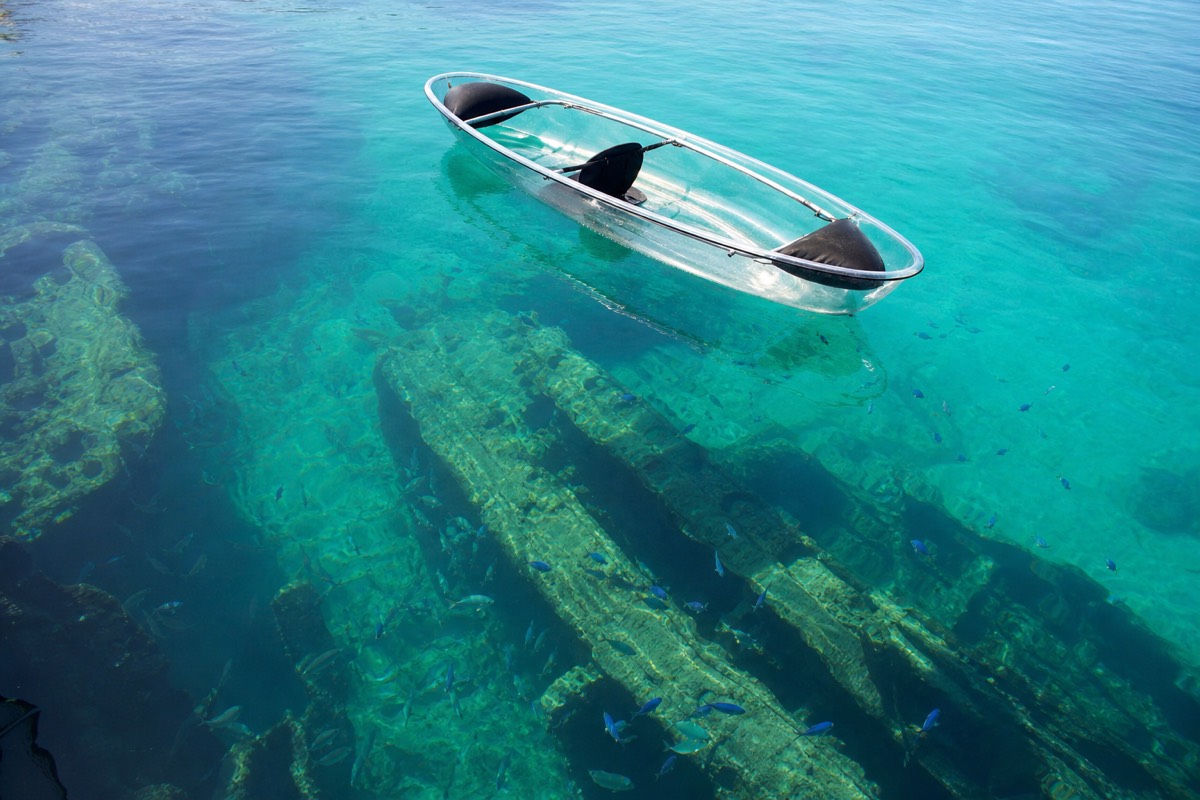
Yes. Several tours include clear-bottom kayaking or stand-up paddleboarding over the wreck site as an alternative or addition to swimming, which suits anyone who wants to see the wrecks from above the water rather than in it. We go into this specifically in kayaking the Tangalooma Wrecks.
How Did The Wrecks End Up Shaping The Way People Visit Today?
The scuttling program that created the wrecks was purely functional, a breakwater for small-boat anchorage, and nobody involved in 1963 was thinking about snorkeling tourism; the reef habitat and the tour industry built around it both emerged decades later as an unplanned side effect. That history matters for expectations: this isn't a curated dive park engineered for visitors, it's a working harbour structure that nature colonised, which is part of why it feels different from a purpose-built snorkeling attraction.
Over sixty years of coral, sponge and algae growth have gradually built genuine reef structure over the original steel and timber hulls, and the fish community followed the habitat, not the other way around. What you're swimming over today is closer to a mature artificial reef than a shipwreck site in the usual sense, which explains the density of marine life packed into such a small, shallow area.
A Worked Example: What A Wreck-Snorkeling Morning Actually Looks Like
A typical guided visit runs in a predictable rhythm: arrival and a safety/gear briefing, a guided swim out to the first cluster of wrecks, twenty to thirty minutes exploring several hulls, then a return swim or boat pickup, usually under an hour in the water from start to finish.
| Stage | What happens | Approx. time |
|---|---|---|
| Arrival & briefing | Gear fitted, guide explains current conditions and what to expect | 10-15 min |
| Swim out | Guided swim from the beach or boat to the nearest wreck cluster | 5-10 min |
| Exploring the wrecks | Moving between several hulls, spotting fish, turtles, wobbegongs | 25-35 min |
| Return | Swim or boat pickup back to shore/vessel | 5-10 min |
Self-guided visits follow roughly the same shape without the formal briefing, so budget a similar window if you're timing a solo visit around the tide.
Gear Checklist: Guided Tour Vs Bringing Your Own
On a guided tour, mask, snorkel and fins are typically supplied as standard, though wetsuits and prescription masks are worth confirming in advance; self-guided visitors need to bring everything themselves, including sun and reef protection that a briefed group would otherwise be reminded about.
| Item | Guided tour | Self-guided |
|---|---|---|
| Mask, snorkel, fins | Usually provided | Bring your own |
| Wetsuit/rash vest | Sometimes provided, confirm with operator | Bring your own |
| Reef-safe sunscreen | Bring your own either way | Bring your own |
| Reef shoes | Recommended, bring your own | Recommended, bring your own |
| Underwater camera | Optional, bring your own | Optional, bring your own |
Who Should Think Twice Before Snorkeling The Wrecks?
Non-swimmers, anyone with an uncontrolled medical condition affected by cold water or exertion, and very young children without close one-on-one supervision should approach this cautiously; the water is shallow and generally calm, but it is still open water, not a pool. None of this rules the wrecks out for most people, but a guided tour with a life-jacket option is the safer route for anyone in these categories rather than a fully self-guided visit.
- Non-swimmers: ask about flotation aids or a life-jacket option on a guided tour rather than attempting a self-guided visit
- Young children: closer supervision than open beach swimming, given the wreck structure and occasional current between hulls
- Anyone unwell or fatigued: sit this one out; fatigue plus open water is a genuinely bad combination
- Anyone uneasy around marine wildlife encountered up close: a guided tour's briefing helps manage this better than going in unprepared
How Does The Water Temperature Change Through The Year?
Water temperature follows the seasons closely: warmest, most comfortable for snorkeling without a wetsuit from roughly December to March, and noticeably cooler from June to August, when many visitors prefer a rash vest or light wetsuit even for a short swim.
| Season | Typical water feel | Wetsuit needed? |
|---|---|---|
| Summer (Dec-Feb) | Warm, ~26-28°C | No |
| Autumn (Mar-May) | Mild, cooling gradually | Optional |
| Winter (Jun-Aug) | Cooler | Recommended for longer sessions |
| Spring (Sep-Nov) | Warming back up | Optional, cooler mornings |
Which Tours Actually Put You In The Water At The Wrecks, And What Do They Cost?
Three of the site's six tours explicitly build the wrecks into their itinerary: the kayak, snorkel and sandboarding combo, the eco marine safari, and the dolphin watching and Tangalooma snorkel cruise. Prices and formats differ enough that it's worth matching the tour to what you actually want from the wrecks, rather than assuming they're interchangeable.
| Tour | Typical price | Wrecks-related focus |
|---|---|---|
| Moreton Island Day Tour (Kayak, Snorkel Wrecks & Sandboarding) | ~$139 | Snorkeling plus clear-kayak views of the wrecks |
| Moreton Island Eco Marine Safari & Snorkel Experience | ~$143 | Naturalist-guided wildlife and reef focus |
| Moreton Island Dolphin Watching & Tangalooma Snorkel Cruise | ~$200 | Wrecks snorkeling paired with dolphin watching |
Tips For Photographing The Wrecks Underwater
A simple waterproof phone case or an inexpensive action camera captures the wrecks perfectly well; the bigger factor is timing, since the same clear morning conditions that give the best visibility for snorkeling also give the best light for photos. Shooting with the sun behind you rather than into it, and getting close to a hull rather than photographing from a distance, both make a bigger difference underwater here than expensive gear does.
Does Camping Nearby Let You Time The Wrecks Around The Tide Better?
Yes, and it's one of the more underrated advantages of camping over a single day trip: since visibility and ease of access both shift with the tide, campers can simply check the tide table each morning and snorkel whenever conditions are best that day, rather than being locked into whatever window a single day tour happens to schedule. A day-tripper's visit to the wrecks happens exactly once, at whatever tide the itinerary lands on; a camper based nearby can chase the good conditions across several mornings instead. See our camping guide for zone options close to Tangalooma.
Frequently Asked Practical Questions
- Do you need a snorkeling certification? No, snorkeling requires no certification, unlike scuba diving; basic swimming comfort is what actually matters.
- Can non-swimmers still see the wrecks? Yes, via a glass-bottom or clear kayak on tours that offer it, or by watching from the boat while others swim.
- Are the wrecks suitable for young children? Yes on a guided tour with flotation aids and close supervision; a self-guided visit suits confident child swimmers better than beginners.
- Is there a fee to snorkel independently from the beach? No separate fee beyond getting to the island; gear is the only thing you need to bring yourself.
What's The Honest First-Timer Expectation To Set?
Go in expecting a genuinely good, easy snorkel rather than a world-class dive site, and the wrecks consistently over-deliver on that modest expectation: dense fish life, a good shot at a turtle or a wobbegong, and all of it reachable without a dive certification or a long boat ride out to open water. Visitors who arrive expecting a Great Barrier Reef-level experience sometimes rate it lower than it deserves; visitors who arrive expecting an easy, accessible shallow-water reef nearly always come away impressed.
That gap between expectation and reality is really the whole story of the Tangalooma Wrecks: a working harbour structure from 1963 that nobody designed as a tourist attraction has quietly become one of the easiest, most rewarding snorkeling stops near any Australian capital city.
What's The One-Sentence Version, For Anyone Skimming?
Fifteen scuttled ships, sixty-plus years of coral growth, shallow enough to swim to from the beach, and stocked with turtles, wobbegongs and rays: the Tangalooma Wrecks are Moreton Island's single easiest, most reliable wildlife encounter, guided or not.
Getting There
The wrecks sit directly off Tangalooma Beach on the island's west coast, reached by the MICAT ferry or Tangalooma Flyer from Brisbane, or as a stop on nearly every guided day tour that visits Moreton Island. If snorkeling the wrecks is your main reason for the trip, prioritise a tour that lists them explicitly in the itinerary rather than assuming every Moreton Island tour includes them.