Moreton Bay Marine Park And Wildlife Guide
Moreton Bay Marine Park covers around 3,400 square kilometres of water around the island, and the wrecks, seagrass beds and open channels inside it hold one of the more varied wildlife lists near any Australian capital city: dugongs, wobbegong sharks, green turtles, bottlenose dolphins and over 200 recorded fish species. Here's what you're actually likely to see, and when.
Trip planning note: prices, permits, timetables and historical ratings below are estimates or background examples, not current booking quotes. Use the provider calendar for the selected departure and confirm all mandatory fees.
A marine naturalist and time around the wrecks add interpretation to the boat trip; wildlife sightings remain unpredictable. Explore Moreton Wrecks And Wildlife Cruise
Moreton Bay Marine Park is not a single site so much as the whole stretch of protected water surrounding Moreton Island, roughly 3,400 square kilometres of seagrass meadows, sand channels and reef, and it's the reason a single day trip here can plausibly turn up a dugong, a shark and a sea turtle before lunch.
Moreton Bay Marine Park wildlife: best season to see each species
Seasonal windows compiled from the operators' own published tour season tables, 2026.
The Quick Answer
Expect wobbegong sharks and green turtles around the Tangalooma Wrecks year-round, bottlenose dolphins in open water year-round, a resident dugong population with a stronger sighting window roughly September to November, and migrating humpback whales passing offshore from around June to October. Most sightings happen on boat-based tours with an onboard naturalist rather than by chance from the beach.
What Is Moreton Bay Marine Park?
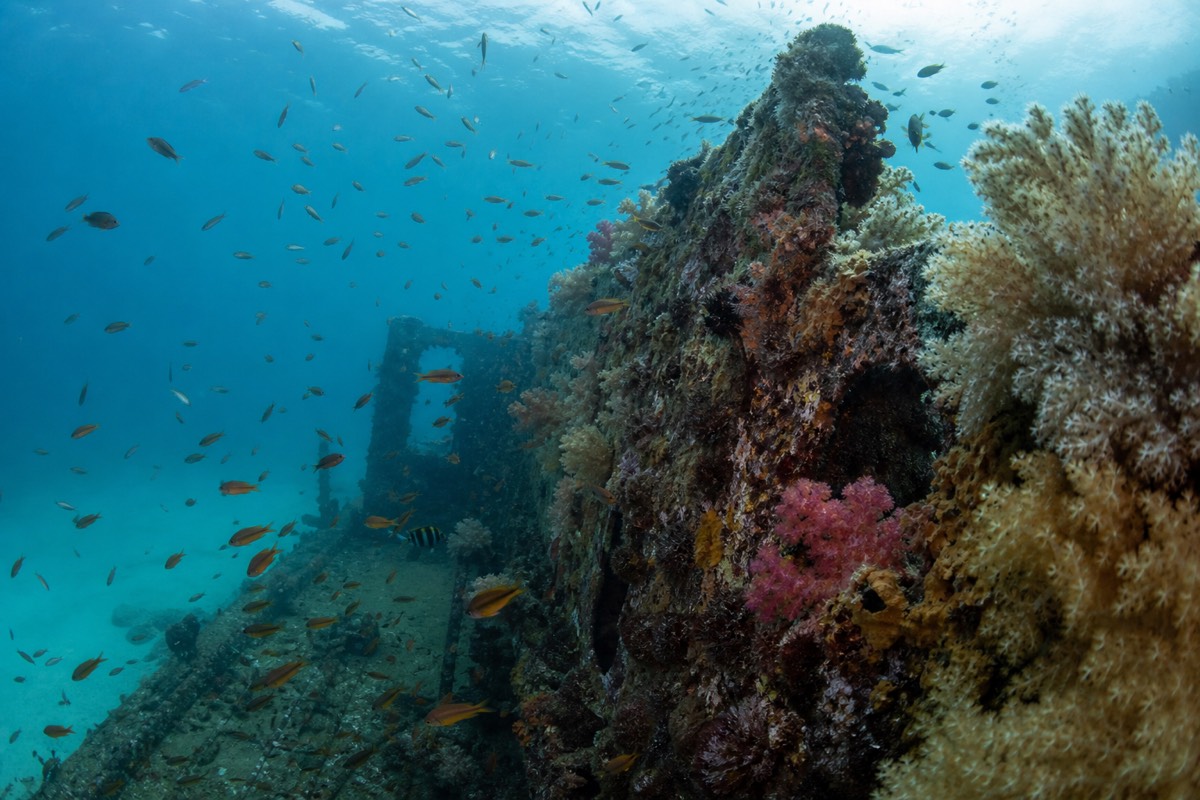
Moreton Bay Marine Park is the protected marine zone covering roughly 3,400 square kilometres of water around Moreton Island and the wider bay, encompassing seagrass meadows, the Tangalooma Wrecks reef, sand channels and open water. It's managed specifically to protect the resident and migratory species that use it, from dugongs grazing the seagrass to migrating whales passing through offshore waters.
What Wildlife Actually Lives Here?
| Species | Where you're likely to see it | Best season |
|---|---|---|
| Dugongs | Seagrass meadows across the bay | Strongest window roughly September-November |
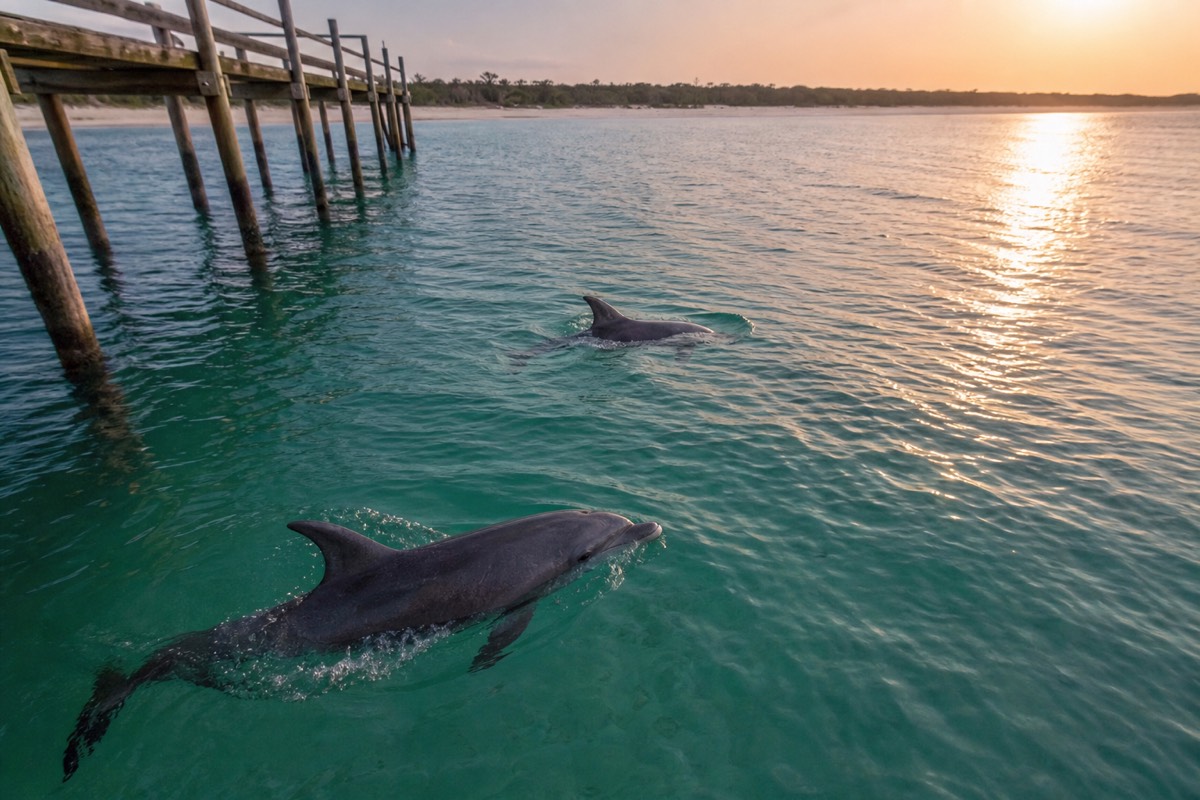
| Bottlenose dolphins | Open water, near the wrecks, at Tangalooma jetty | Year-round |
| Humpback whales | Offshore, migration route past the island | June-October, peak August-September |
| Wobbegong sharks | Resting on the Tangalooma Wrecks hulls/seabed | Year-round |
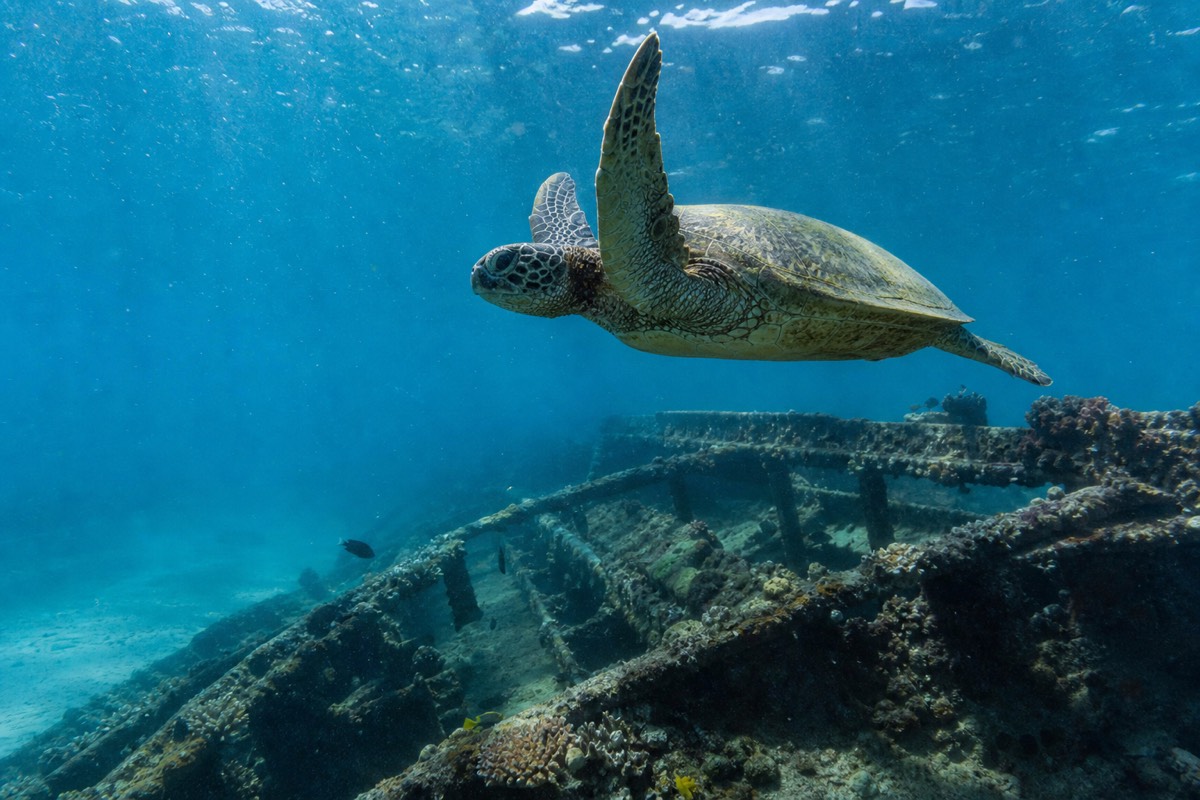
| Green sea turtles | Around the wrecks and seagrass edges | Year-round |
| Reef fish (200+ species) | Tangalooma Wrecks | Year-round |
Where's The Best Chance Of Seeing Dugongs?
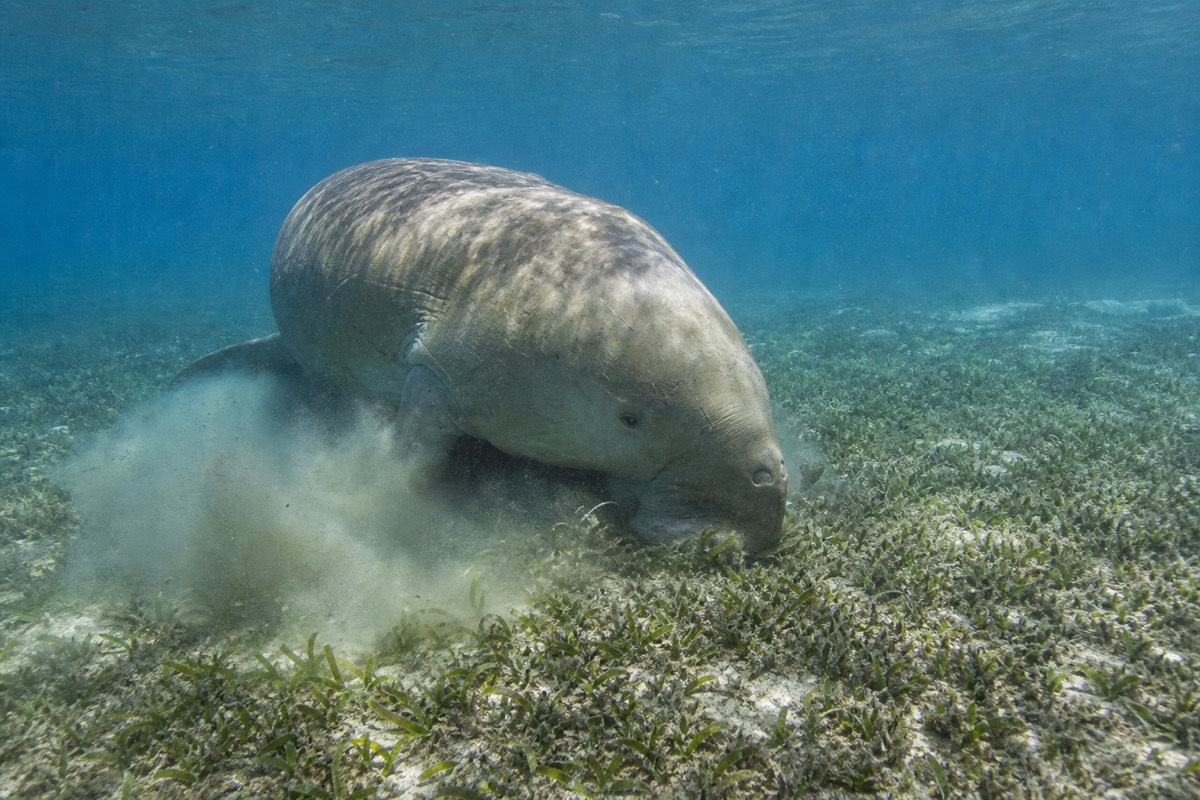
Dugongs graze the seagrass meadows across Moreton Bay, and a resident population means sightings are possible year-round, but tour operators report the strongest window for reliable encounters roughly September to November. Naturalist-guided cruises, which know current feeding areas, generally do better than a self-guided visit for dugong sightings specifically, since these animals are shy and easily missed without local knowledge of where they've been feeding recently.
What About Sharks, Are They Dangerous?
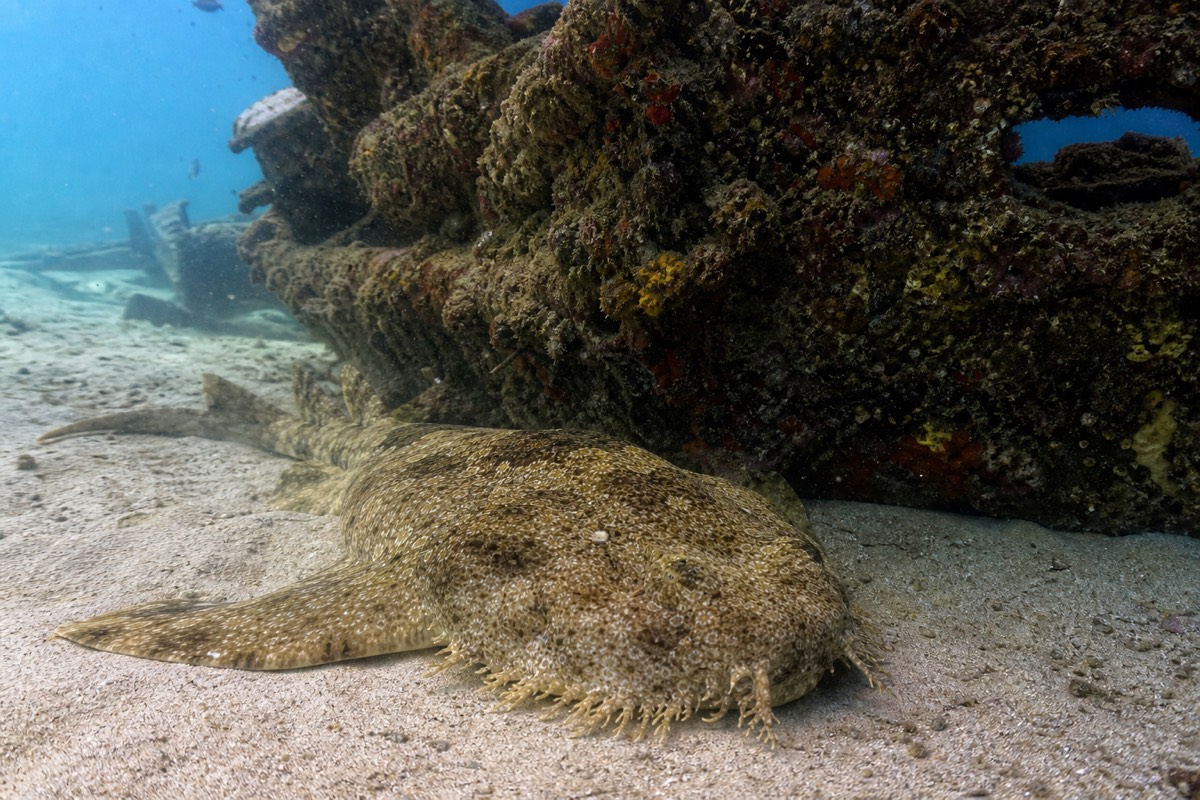
The shark most visitors actually encounter here is the wobbegong, a bottom-dwelling, camouflaged species that rests on the wreck hulls and seabed and poses minimal risk to snorkelers who don't handle or step on one. We answer the shark safety question specifically, with more detail on species and behaviour, in are there sharks at the Tangalooma Wrecks.
When Do The Humpback Whales Pass Through?
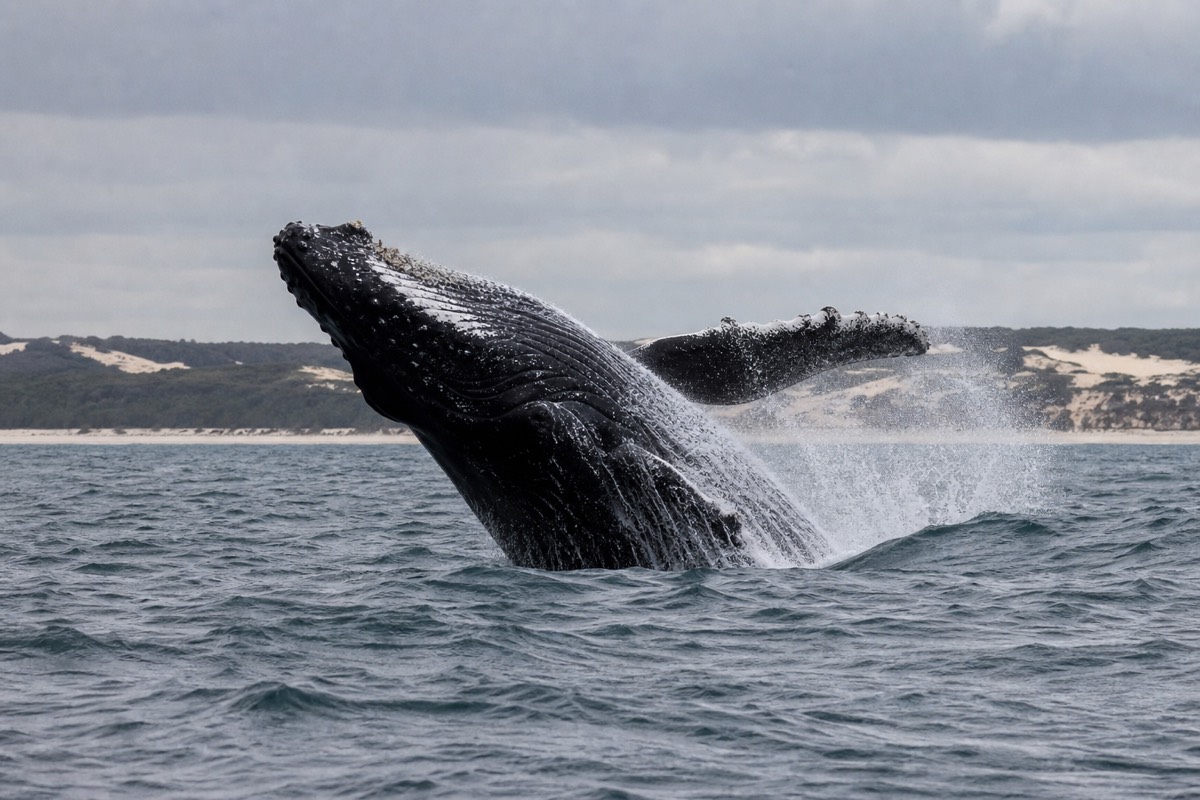
Humpback whales migrate along the Queensland coast roughly June to October, with sightings most reliable in August and September, and several tour operators report seeing them directly from the boat during the crossing to Moreton Island. Full detail, including which of the site's own tours report whale sightings during transit, is in our whale watching guide.
Is A Naturalist-Guided Tour Worth It For Wildlife Spotting?
Yes, meaningfully so: an onboard marine naturalist knows current feeding and resting areas for dugongs, turtles and dolphins, which turns a general boat trip into a genuine wildlife-spotting outing rather than leaving sightings to chance. Tours like the eco marine safari and the dolphin watching cruise are built specifically around this kind of guided spotting, with naturalist commentary through the day.
Why Does Moreton Bay Support This Much Marine Life So Close To Brisbane?
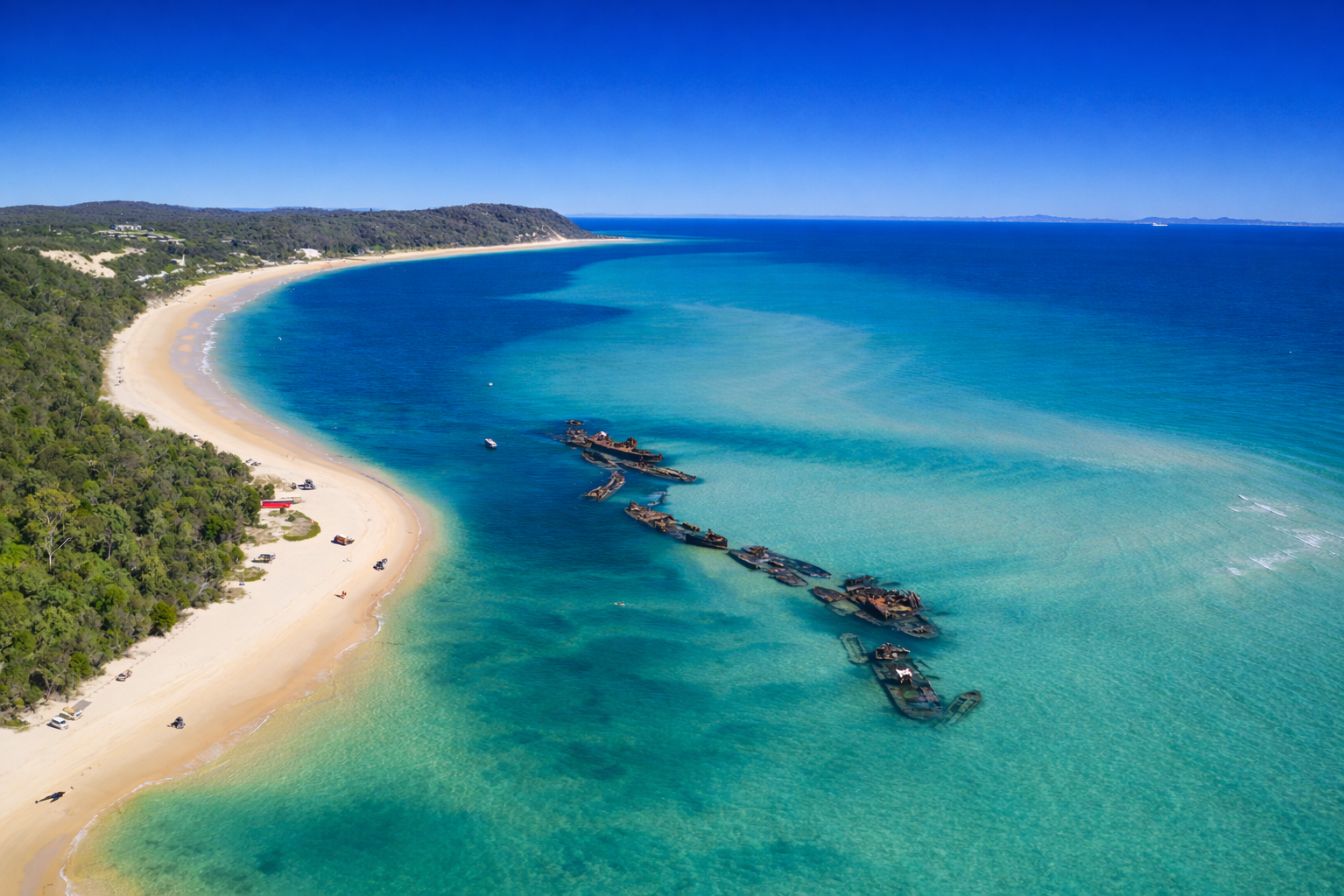
The bay's combination of sheltered water, extensive seagrass meadows and a mix of sandy and reef habitat (including the artificial reef at the wrecks) creates the range of conditions different species need, from grazing dugongs to reef-dependent fish, all within a protected marine park boundary that limits commercial fishing pressure. That density of habitat types packed into a relatively small, protected area is unusual for a location this close to a major capital city, and it's the underlying reason the wildlife list here reads more like a remote destination than an urban-adjacent bay. It's also why the Tangalooma dolphin feeding program has been able to run for decades in the same stretch of water.
A Month-By-Month Wildlife Scorecard
| Month | What's most active |
|---|---|
| Jan-Feb | Turtles and reef fish at their most visible in warm, clear water |
| Mar-May | Stable conditions, good all-round dolphin activity |
| Jun-Jul | Whale migration begins |
| Aug-Sep | Peak whale season |
| Sep-Nov | Strongest dugong sighting window |
| Dec | Warm water returns, turtle season builds again |
What Should You Bring On A Wildlife-Focused Tour?
- Polarised sunglasses, which cut glare and make spotting animals below the surface noticeably easier
- A zoom-capable camera or phone case if you want photos of whales or dolphins at a respectful distance
- Reef-safe sunscreen if you'll be snorkeling as part of the same trip
- Patience; wildlife sightings are never guaranteed on any single outing, whale, dugong or otherwise
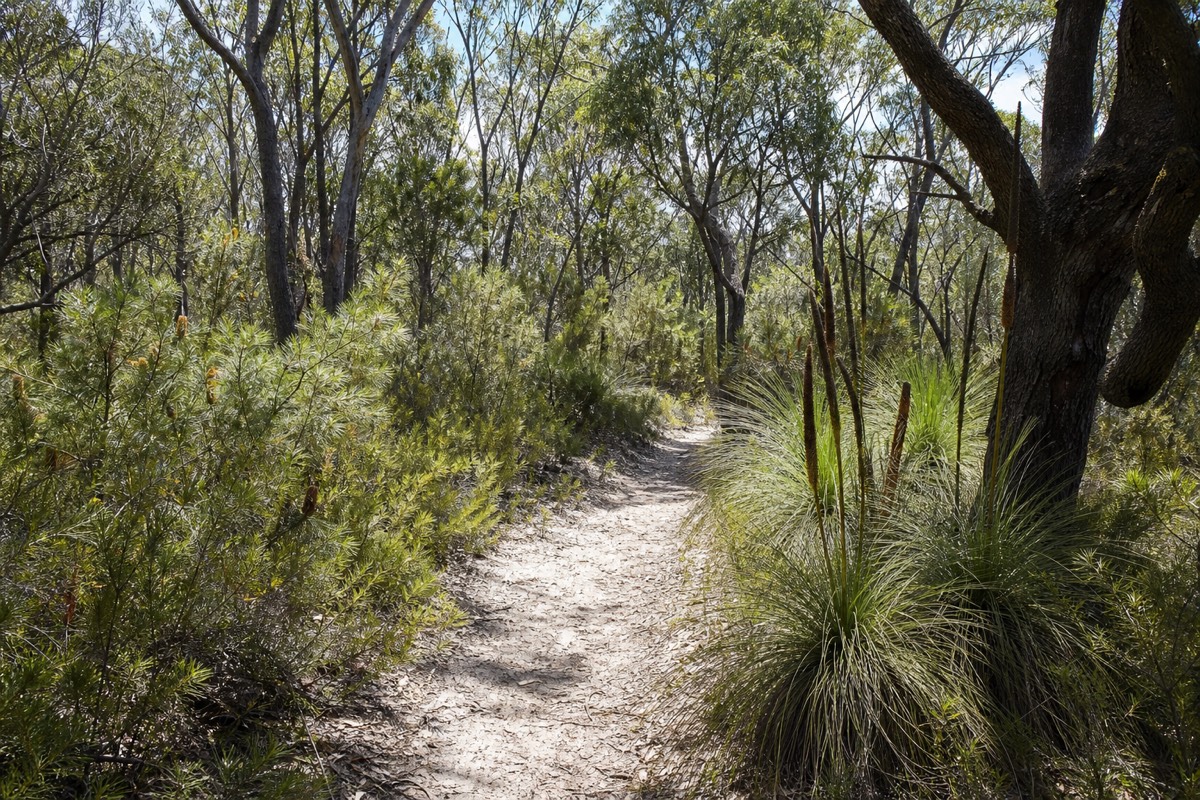
For land-based wildlife watching away from the boat, both Cape Moreton Lighthouse and the quieter North Point and Honeymoon Bay stretch offer a genuine shot at spotting whales or dolphins from the shore.
Responsible Wildlife Viewing
Keep a respectful distance from dugongs and turtles, never chase or corner marine wildlife while snorkeling, and follow your guide's briefing on approach distances, since these are protected species inside a managed marine park, not a zoo exhibit. Moreton Bay Marine Park's protections exist precisely because this stretch of water carries a genuinely rare concentration of marine life this close to a capital city.
How Does The Marine Park's Zoning Actually Protect Wildlife?
Moreton Bay Marine Park is divided into zones with different levels of protection, ranging from areas that allow regulated fishing and boating to fully protected "green zones" where extraction is prohibited, a structure designed to let human use and marine habitat coexist rather than excluding people from the bay entirely. Tour operators running snorkel and wildlife trips typically work within and around these zones as a matter of course, which is part of why guided trips tend to consistently find wildlife: they know where the protected, undisturbed habitat sits.
Which Of The Site's Tours Gives The Best Wildlife-Spotting Odds?
The eco marine safari and the dolphin watching and Tangalooma snorkel cruise are both built specifically around wildlife spotting with onboard naturalist commentary; the kayak, snorkel and sandboarding combo tour also reaches the wrecks' resident wildlife as part of a broader activity mix, while the remaining tours don't market a dedicated naturalist focus. If wildlife is your main priority rather than a bonus, a tour explicitly built around it will generally out-perform one where spotting is incidental to another main activity.
| Tour | Wildlife focus |
|---|---|
| Moreton Island Eco Marine Safari & Snorkel Experience | Dedicated naturalist/wildlife focus |
| Moreton Island Dolphin Watching & Tangalooma Snorkel Cruise | Dedicated dolphin and marine wildlife focus |
| Moreton Island Day Tour (Kayak, Snorkel Wrecks & Sandboarding) | Wrecks wildlife as part of a broader activity mix |
| Other tours (jetski, quad bike, full-day hopping) | Wildlife sightings possible but not the marketed focus |
What Does A Naturalist-Guided Wildlife Tour Typically Cost?
| Tour | Typical price | Duration |
|---|---|---|
| Moreton Island Eco Marine Safari & Snorkel Experience | ~$143 | 8 hours |
| Moreton Island Dolphin Watching & Tangalooma Snorkel Cruise | ~$200 | 12 hours |
Both bundle the naturalist commentary into the standard tour price rather than charging it as an add-on, so there's no separate "wildlife spotting fee" to budget for on top of the ticket.
How Does Water Visibility Affect What You'll Actually Spot?
Clearer water makes every sighting easier, from a wobbegong shark camouflaged on a hull to a dugong grazing seagrass at depth, and visibility follows the same seasonal pattern as water temperature: clearest and warmest from December to February, generally still workable but cooler from June to August. A calm, low-wind morning outperforms an equally warm but windy afternoon for visibility, regardless of the month.
| Season | Typical visibility for spotting wildlife |
|---|---|
| Summer (Dec-Feb) | Warmest water, generally strong visibility |
| Autumn (Mar-May) | Stable, clear conditions |
| Winter (Jun-Aug) | Cooler but often very clear on calm days |
| Spring (Sep-Nov) | Warming, generally good visibility, dugong window open |
Common Mistakes Wildlife-Focused Visitors Make
Booking a general activity tour and expecting dedicated naturalist-level spotting, visiting outside a species' known season and being disappointed when it doesn't appear, and skipping polarised sunglasses, which make a genuine difference spotting anything below the surface, are the three that come up most. A quieter fourth: forgetting that every sighting on a wild marine park is probabilistic, not guaranteed, no matter how good the tour or how favourable the season.
What Can You Realistically Expect To See On A Single 8-Hour Tour?
On a typical naturalist-guided day, expect reef fish and likely a turtle or wobbegong at the wrecks as close to certainties as wildlife spotting gets, dolphins as a strong likelihood in open water, and a dugong or whale sighting (in season) as a genuine possibility rather than a guarantee. Stacking realistic odds like this, rather than treating every species on the list as equally likely, sets expectations that match what most single-day visitors actually experience.
None of these odds are fixed promises, wild animals don't read itineraries, but they're a fair, honest starting point built from what tour operators themselves report seeing across a typical season, not an inflated marketing version of what any single day guarantees.
| Species | Realistic odds on a single day tour |
|---|---|
| Reef fish | Near-certain |
| Green turtle | Likely |
| Wobbegong shark | Likely |
| Bottlenose dolphin | Good chance, especially with a naturalist guide |
| Dugong (Sep-Nov) | Possible, not guaranteed, best odds in season |
| Humpback whale (Jun-Oct) | Possible during the migration window, best odds Aug-Sep |
How Does A Repeat Visitor's Experience Differ From A First-Timer's?
First-time visitors tend to focus on ticking off the headline species, a turtle, a shark, a dolphin, while repeat visitors who've already seen the common sightings start noticing the smaller detail: which wreck a particular wobbegong tends to favour, how dolphin behaviour shifts with the tide, or which weeks within the dugong window actually produced sightings on their own past trips. Neither experience is better, but it's worth knowing going in that the marine park rewards repeat visits with a deeper, more specific kind of wildlife knowledge than any single day can deliver, however good that one day turns out to be.
Does A Longer Tour Actually Improve Your Wildlife Odds?
More time on the water generally does help, since wildlife sightings are probabilistic rather than scheduled, but it isn't a strict straight line: the 8-hour eco marine safari and the 12-hour dolphin watching and Tangalooma snorkel cruise both build in dedicated wildlife-spotting time rather than treating it as an afterthought, so the tour's actual focus matters as much as its raw length. A shorter, wildlife-focused tour can outperform a longer one built primarily around a different main activity.
| Tour | Duration | Wildlife-spotting time |
|---|---|---|
| Moreton Island Eco Marine Safari & Snorkel Experience | 8 hours | Dedicated naturalist focus throughout |
| Moreton Island Dolphin Watching & Tangalooma Snorkel Cruise | 12 hours | Dedicated dolphin/marine focus, plus wrecks snorkeling |
How Do Snorkelers And Boat Passengers Experience The Wildlife Differently?
Snorkelers get close-range, eye-level encounters with wrecks-based species, reef fish, wobbegongs, turtles, at the cost of a narrower field of view; boat passengers see a wider stretch of water and are generally better placed to spot dolphins, dugongs or a distant whale, animals that move through open water rather than staying put on a reef. A tour that combines both, time in the water at the wrecks plus open-water cruising between stops, genuinely covers more of the marine park's wildlife range than either approach alone.
Does The Marine Park Extend Beyond The Areas Tours Actually Visit?
Yes, considerably: the roughly 3,400 square kilometres of protected water stretches well beyond the wrecks, the dolphin jetty and the dugong seagrass beds that tours typically focus on, meaning the areas most visitors see represent the accessible, well-known fraction of a much larger protected system rather than the whole of it. That's part of why the park can support this density of wildlife so close to Brisbane: the visited areas are a small, carefully chosen sample of a genuinely large protected habitat, not the entire resource being drawn on.
How Does The Wildlife Here Compare With What A First-Timer Might Expect From "A Boat Trip Near A City"?
Most visitors arrive expecting a pleasant but fairly ordinary boat outing and leave having seen genuinely wild dugongs, sharks and turtles within an hour's travel of a state capital, a combination that's rare enough globally that it consistently over-delivers against modest expectations set by the phrase "day trip from Brisbane." That gap between expectation and reality is part of why this marine park keeps surprising first-time visitors more than almost any other stop on the island.
The One-Line Version, For Anyone Skimming
Dugongs, dolphins, wobbegongs, turtles and migrating humpback whales, all inside one protected 3,400 square kilometre marine park within day-trip range of Brisbane, best seen with a naturalist-guided tour rather than left to chance.
What's The Difference Between A "Good" And A Genuinely Exceptional Wildlife Day Here?
| Typical day | Exceptional day |
|---|---|
| Reef fish, a turtle or two at the wrecks | Multiple turtle sightings plus a dugong encounter |
| A wobbegong resting on a hull | Several wobbegongs across different wrecks |
| Dolphins glimpsed at a distance | Dolphins playing close to the boat for an extended period |
| No whale sighting (outside peak season) | A breaching whale during the August-September peak |
Even a "typical" day here compares favourably with most marine wildlife outings near a major city, which is worth keeping in perspective if a specific species doesn't show up on your particular visit. For a slower, closer look at that same wildlife from above the water rather than a boat deck, see kayaking the Tangalooma Wrecks.