Cape Moreton Lighthouse Guide
At the island's north-eastern tip, Cape Moreton Lighthouse sits on a sandstone headland with one of the widest ocean views in Moreton Bay, and it happens to be one of the better whale-watching lookouts in the region during the winter migration. It's also a genuinely under-the-radar stop, one that most day tours barely mention.
Trip planning note: prices, permits, timetables and historical ratings below are estimates or background examples, not current booking quotes. Use the provider calendar for the selected departure and confirm all mandatory fees.
The verified three-day camping route includes Cape Moreton. It suits travellers aged 18–35 who want a wider northern-island trip. Explore Three-Day Moreton Camping And Northern Loop
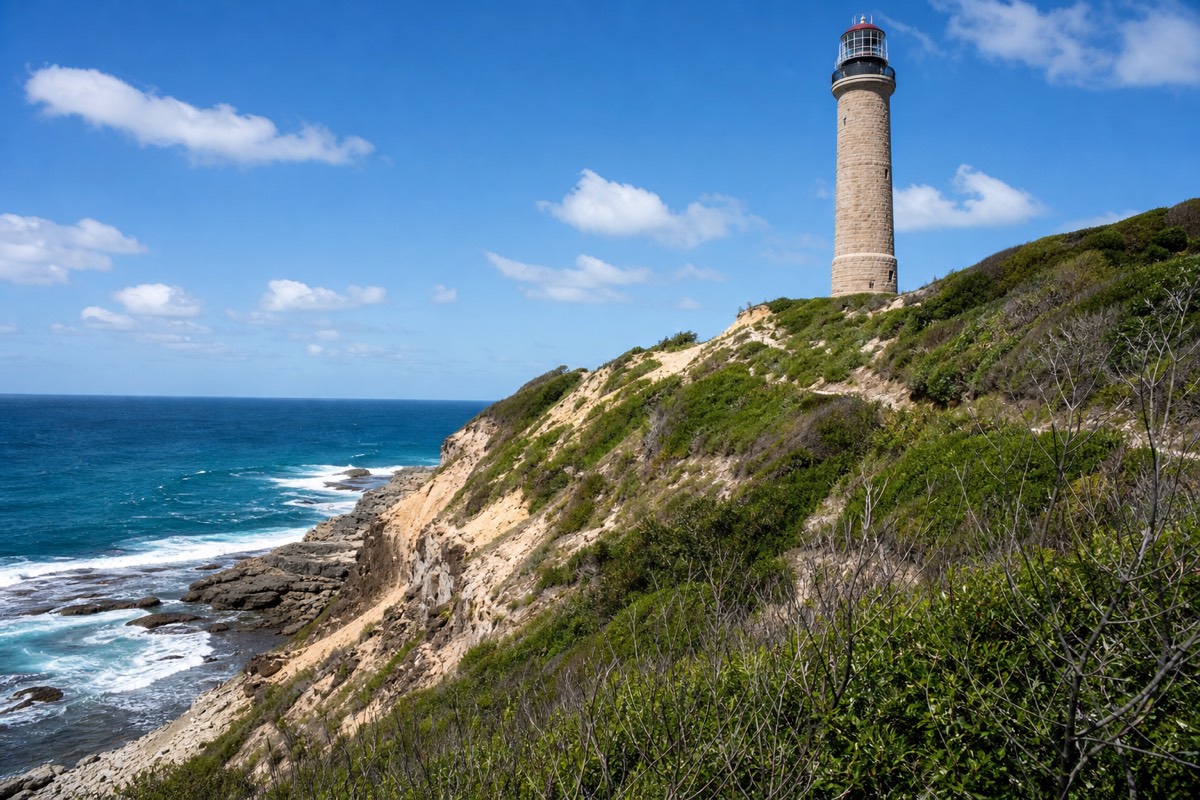
At the island's north-eastern tip, the sand gives way to sandstone. Cape Moreton is the one place on Moreton Island that looks nothing like the rest of it, and the lighthouse that has stood on its cliff since the 1850s is as much a reason to visit as the view itself.
The Quick Answer
Cape Moreton Lighthouse is a heritage lighthouse on Moreton Island's rocky north-eastern headland, one of Queensland's oldest, reached by 4WD or, on some tours, by helicopter flyover. It's a genuine whale-watching vantage point from roughly June to October and a worthwhile stop even outside whale season for the cliff and ocean views alone.
What Is Cape Moreton Lighthouse?
Cape Moreton Lighthouse is a historic sandstone lighthouse built in the 1850s, among the oldest in Queensland, standing on the sandstone headland that forms the island's north-eastern point. Unlike the rest of Moreton Island, which is almost entirely sand, Cape Moreton is rocky, the one place on the island where you'll find genuine cliffs rather than dunes.
It remains an active aid to navigation as well as a heritage site, and its position on the highest rocky point on the island's coast gives it a genuinely commanding view over the open Coral Sea to the east and Moreton Bay to the west.
How Do You Get To Cape Moreton Lighthouse?
By 4WD along the island's northern tracks, or as a scenic flyover on a helicopter tour; it's a longer drive from Tangalooma than most of the island's other landmarks, so it suits either a dedicated 4WD day or a helicopter-inclusive tour rather than a quick stop.
| Access method | Notes |
|---|---|
| Self-drive 4WD | Northern tracks from Bulwer/Tangalooma; permit required, see our 4WD guide |
| Guided 4WD tour | Some full-day tours route past the Cape as part of a northern-island circuit |
| Helicopter flyover | Included on the quad bike and helicopter tour's scenic flight route |
Is Cape Moreton A Good Whale-Watching Spot?
Yes. Its high, exposed headland position makes it one of the better land-based whale-watching vantage points on the island during the humpback migration, roughly June to October, with the best odds in August and September. This lines up with the same migration window several of the site's own boat tours report seeing whales during their crossing; see our whale watching guide for the full seasonal detail.
What Else Is There To See At The Cape?
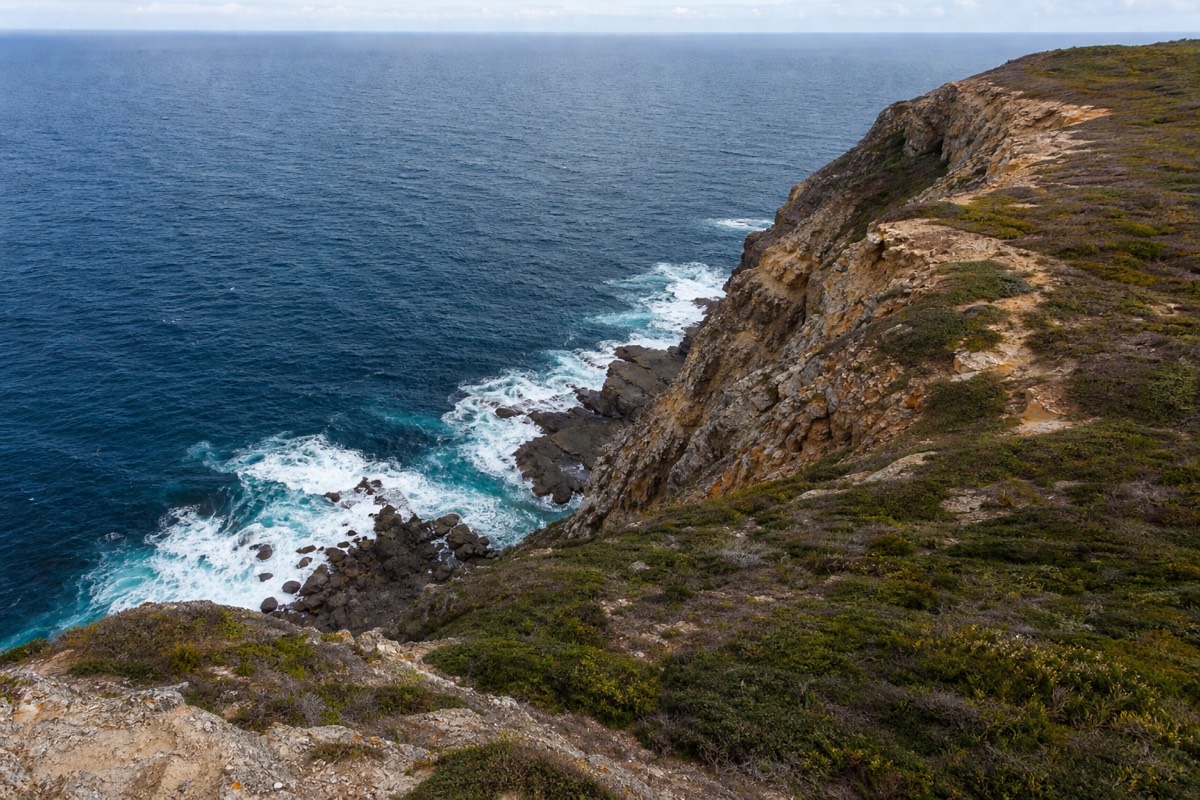
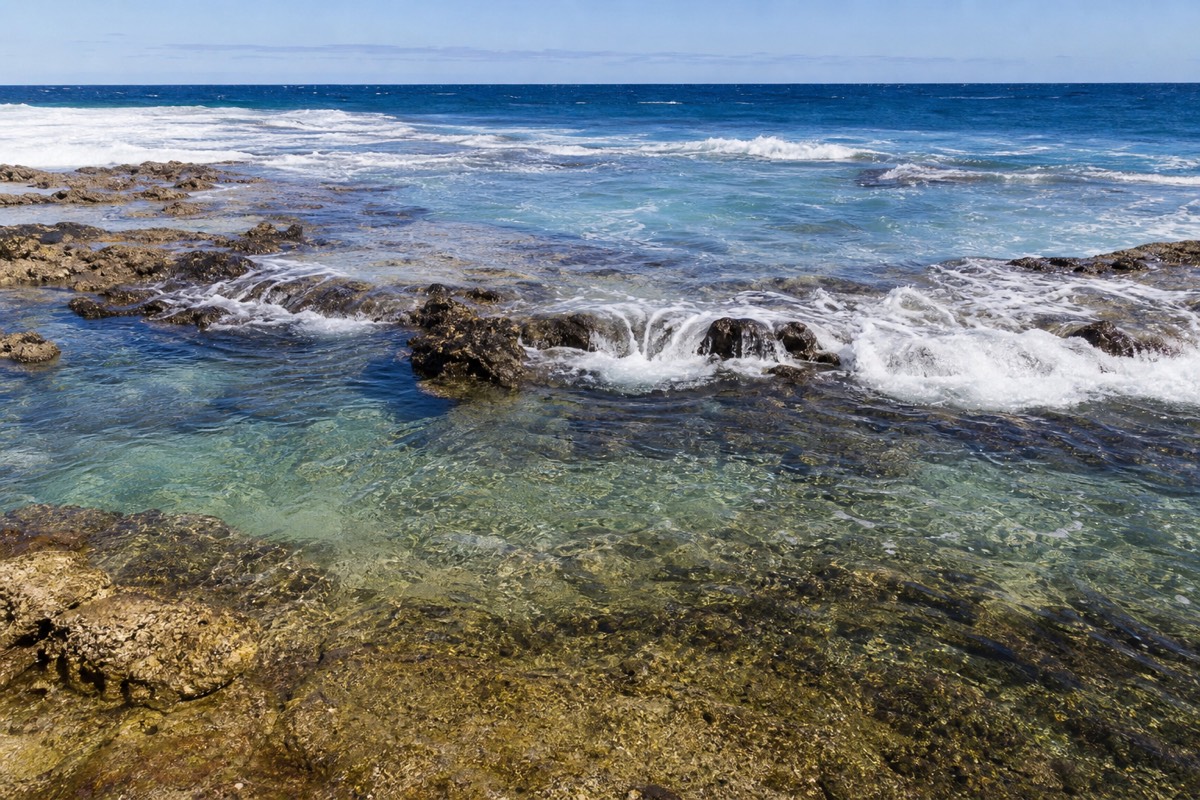
Sandstone cliffs and rock platforms unlike anywhere else on the island, wide ocean views in both directions, and typically far fewer people than the main Tangalooma beach areas, since it's a genuine drive from the resort. The heritage lighthouse buildings themselves are also worth the stop for anyone interested in the island's maritime history.
Should You Combine It With Champagne Pools?
Yes, if you're already making the drive north. Champagne Pools sits close to North Point, not far from Cape Moreton, so the two are naturally paired on a northern-island itinerary rather than visited on separate trips. See our dedicated Champagne Pools guide for what to expect there, including an important disambiguation from the unrelated Champagne Pools on K'gari.
What's The History Behind The Lighthouse Itself?
Cape Moreton Lighthouse was built in the 1850s and ranks among Queensland's oldest lighthouses, constructed from sandstone quarried near the site itself, and it has stood guard over one of the busier stretches of shipping approach into Moreton Bay ever since. Its age sets it apart from most of what else there is to see on Moreton Island, where almost nothing else on the sand-built island predates the twentieth century.
The lighthouse remains an active aid to navigation today, alongside its heritage status, which is part of why the buildings and grounds are maintained rather than left as a ruin. Heritage keeper's-era buildings still stand nearby, giving the headland a genuine sense of place beyond the view alone.
What Does A Visit To The Cape Actually Involve, Step By Step?
| Stage | What to expect |
|---|---|
| Approach | Northern sand tracks from Tangalooma or Bulwer, a genuine drive |
| Arrival | Parking near the headland, short walk up to the lighthouse and cliffs |
| At the headland | Lighthouse buildings, cliff-edge views, whale watching in season |
| Nearby stop | Champagne Pools and North Point, a short further drive |
Cape Moreton Vs The Rest Of The Island: Why It Looks So Different
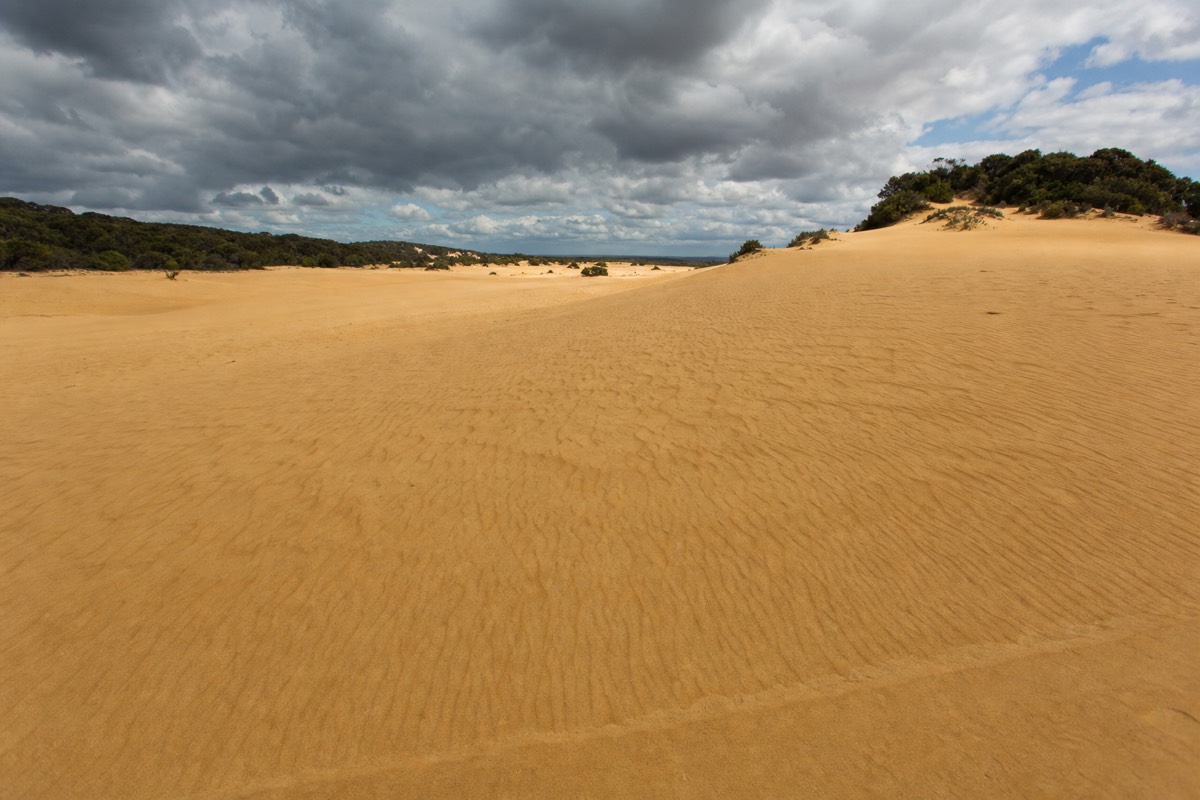
Almost all of Moreton Island is built from wind-deposited sand, but Cape Moreton is an exposed outcrop of much older sandstone rock, the one place on the island where the underlying geology actually breaks the surface rather than being buried under dunes. That's the geological reason the cliffs, rock platforms and dramatic coastal views exist here and nowhere else on the island; everywhere else, the coastline is soft sand rather than rock.
Who Should Prioritise This Stop, And Who Can Skip It?
Prioritise Cape Moreton if you're visiting during whale season, driving the island's north anyway for Champagne Pools, or specifically want the island's only rocky coastal scenery; it's reasonable to skip if you're on a tight single-day tour focused on the wrecks and dunes, since the Cape sits well away from that itinerary. Most guided day tours don't route this far north, which is exactly why it remains one of the quieter landmarks on the island.
What Can You Actually Photograph Here That You Can't Elsewhere On The Island?
Cape Moreton offers the only genuine clifftop-over-open-ocean composition on Moreton Island, plus a historic lighthouse structure as a foreground subject, a combination unavailable anywhere else on an island otherwise defined by flat beaches and dunes. Early morning light on the sandstone cliffs, and a breaching whale in season, are the two shots most photographers come away with.
How Does A Visit Here Compare With A Lighthouse Visit Elsewhere In Queensland?
Unlike many mainland lighthouses reachable by sealed road and surrounded by cafes and car parks, Cape Moreton requires genuine 4WD effort to reach, which keeps visitor numbers naturally low and the setting far less developed than a typical tourist lighthouse stop. That's part of the appeal for travellers who've done the easy version elsewhere and want a wilder, less manicured version of the same idea. Nearby, North Point and Honeymoon Bay round out a full northern-island day.
What Does It Cost To Visit Cape Moreton Independently, Versus By Helicopter?
Self-driving costs only the standard vehicle access permit, typically around $50-70, on top of the ferry; the helicopter flyover is bundled into the Tangalooma quad bike and helicopter tour, priced around $292, which buys the aerial view without the long northern drive. Neither is objectively better value, they solve different problems: one trades money for time saved, the other trades a longer drive for a lower cash cost.
| Approach | Typical cost | What you get |
|---|---|---|
| Self-drive 4WD | ~$50-70 permit plus ferry and fuel | Ground-level access to the cliffs and lighthouse grounds |
| Helicopter flyover (quad bike & helicopter tour) | ~$292 for the full tour | Aerial view, no long drive, bundled with other activities |
Self-Drive Or Helicopter Flyover: Which Gives The Better Experience?
A self-drive visit gets you onto the headland itself, inside the lighthouse grounds and down onto the rock platforms, which a flyover can't replicate; the helicopter flyover trades that ground-level detail for a wide aerial perspective and zero driving time. If photographing the lighthouse and cliffs up close matters more than the view of the whole headland from above, drive; if time is the tighter constraint, the flyover is the more efficient option.
How Much Time Should You Realistically Set Aside?
| Stage | Approx. time |
|---|---|
| Drive from Tangalooma | Genuine half-day round trip |
| At the headland itself | 45-60 min |
| Combined with Champagne Pools/North Point | Add another 1-1.5 hours |
| Helicopter flyover (as part of the quad bike & helicopter tour) | A few minutes of flight time within a longer tour |
What's The Wind And Weather Like On The Exposed Headland?
Because Cape Moreton is the island's most exposed rocky point, wind is noticeably stronger here than at the sheltered Tangalooma beaches, and conditions can shift quickly on an otherwise clear day. A light windbreaker is worth packing even on a warm day, and anyone with balance concerns should stay well back from the unguarded cliff edges when it's gusty.
Common Mistakes Visiting Cape Moreton
Underestimating the drive time from Tangalooma, arriving without water or sun protection since there are no facilities at the headland, and standing too close to the unfenced cliff edge for a photo are the three that come up most. A subtler mistake: assuming any full-day tour will route past the Cape. Most don't, since it sits well north of the standard wrecks-and-dunes circuit, so confirm the itinerary specifically if seeing the lighthouse matters to you.
Why Did The Lighthouse End Up On This Particular Headland?
Cape Moreton's rocky point was the obvious choice for a lighthouse precisely because it's the one place on the island where solid stone sits above the waterline rather than shifting sand, giving builders a stable foundation and giving ships a fixed, elevated marker at the entrance to Moreton Bay's busier shipping approaches. Nowhere else on the island offers that combination of height, stability and visibility, which is also why the surrounding headland remains the island's only genuine cliff scenery rather than one of several rocky points.
That practical, functional origin, a navigation aid built where the geology allowed it, is worth keeping in mind alongside the heritage-tourism angle the site carries today. The lighthouse wasn't built as a lookout for visitors; the sweeping views and the whale-watching vantage point are a byproduct of a decision made purely around maritime safety more than 170 years ago.
What Should Photographers And Whale-Watchers Know About Timing A Visit Together?
The two priorities line up conveniently: winter mornings, roughly June to October, combine the best whale-watching odds with clear, low-angle light on the sandstone cliffs, so a dawn or mid-morning visit in that window serves both goals at once rather than requiring separate trips. Outside whale season, the cliffs and lighthouse buildings remain a strong subject regardless, since the clifftop-over-ocean composition doesn't depend on any wildlife showing up to be worth the drive.
| Goal | Best timing |
|---|---|
| Whale watching from the headland | Jun-Oct mornings, peak Aug-Sep |
| Cliff and lighthouse photography | Early morning light, any season |
| Both at once | A winter morning visit, Jun-Oct |
Does Camping Nearby Make The Cape Easier To Reach?
Yes, meaningfully: campers based in one of the island's north-east zones cut out the long return drive from Tangalooma entirely, turning a genuine half-day round trip into a short outing from camp instead. Our camping guide covers zone locations in full, but the practical takeaway here is specific to the Cape: if this headland is a real priority for your trip, camping nearby is the single biggest thing you can do to make repeat, unhurried visits possible, rather than a once-only half-day detour from the resort side of the island.
The same logic applies to Champagne Pools and North Point, all three sitting close enough together that a north-east camping base effectively puts the island's entire northern tip within easy reach for the length of your stay.
What Do First-Time Visitors Ask Most Often About The Cape?
- Is it worth the drive if I'm not visiting during whale season? Yes, the cliffs, rock platforms and ocean views stand on their own regardless of the month.
- Can I see the lighthouse interior? Access to the buildings themselves varies; the grounds and cliff views are the main draw for most visitors.
- Is there mobile signal at the headland? Coverage is patchy across the island's north, so don't rely on it for navigation once you're driving in.
- Is the walk from parking to the lighthouse difficult? No, it's a short walk once you've arrived; the effort is almost entirely in the drive north, not the final approach on foot.
How Does A Visit Here Fit Around The Rest Of A Multi-Stop Northern Day?
Cape Moreton works best as the final stop on a northern loop rather than the first, since it's the furthest point from Tangalooma; visiting Champagne Pools and North Point on the way up, then finishing at the Cape before turning back, avoids doubling back over the same track twice in one day. That sequencing shaves real time off an already long northern-island day, which matters more here than on any of the island's shorter, more central stops.
What Makes This Stop Different From A Typical Lighthouse Photo-Op?
Most lighthouse visits anywhere in the world involve a car park a short walk from the structure; reaching Cape Moreton is genuinely part of the experience itself, a real 4WD journey through sand and dune country that makes the eventual clifftop view feel earned rather than handed to you. That's the honest distinction worth knowing before you go: this isn't a quick roadside stop, it's a destination that rewards the effort of getting there as much as the lighthouse itself does.
The One-Line Version, For Anyone Skimming
Sandstone cliffs on an otherwise all-sand island, a working 1850s lighthouse, and one of the best land-based whale-watching spots on Moreton Island from June to October, reached only by a genuine 4WD drive or a helicopter flyover.
Practical Tips For Visiting
- Budget a genuine half-day if driving yourself; it's the furthest major landmark from Tangalooma
- Bring water and sun protection; there are no facilities at the headland itself
- Check tide times before combining the trip with beach-highway driving, see our 4WD guide
- Winter mornings (June-October) give the best odds of a whale sighting from the headland
- Wear sturdy, closed footwear; the rock platforms are uneven and can be slippery near the waterline
- Bring a camera with some zoom capacity if whale watching is a priority; sightings are typically at a genuine distance offshore