Are There Sharks At The Tangalooma Wrecks?
Yes, and it's a fair question to ask before you get in the water. The honest answer is more reassuring than it sounds.
The word "shark" makes people pause before booking a snorkeling trip, which is understandable. Here's what's actually true about the sharks at the Tangalooma Wrecks, without either exaggerating the danger or pretending sharks aren't there at all.
A guided wreck snorkel adds equipment and an organised water session; it cannot remove the risks of swimming around wild animals. Explore Moreton Wrecks And Wildlife Cruise
The Quick Answer
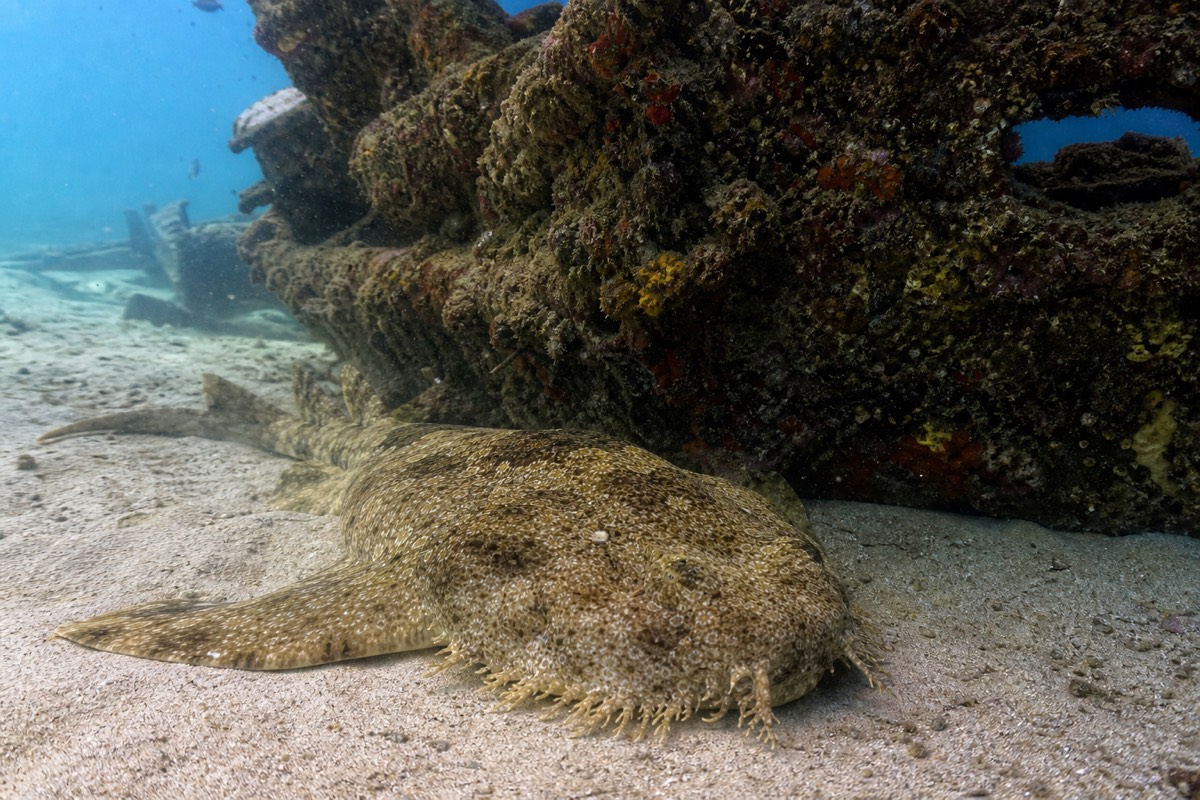
Yes, wobbegong sharks are a common and expected sighting at the Tangalooma Wrecks, resting camouflaged on the wreck hulls or the sandy bottom. They are a bottom-dwelling, non-aggressive species that poses minimal risk to snorkelers who don't handle or step on them. This is a normal part of the wreck ecosystem, not a hazard that should put you off snorkeling here.
What Kind Of Sharks Live At The Wrecks?
The species most commonly encountered is the wobbegong, a flat-bodied, heavily camouflaged carpet shark that spends most of its time motionless on the seabed or resting on wreck structure, blending into the rocky, coral-covered surfaces almost perfectly. They're ambush feeders by nature rather than active hunters of anything larger than small fish and crustaceans, and they have no history of seeking out or targeting people.
Is It Dangerous To Snorkel There?
For the vast majority of snorkelers, no. Wobbegongs are docile toward people who leave them alone, and the handful of documented wobbegong bite incidents in Australian waters generally trace back to someone stepping on, grabbing, or otherwise disturbing the shark, not an unprovoked approach. The commonsense rule applies here as everywhere: look, don't touch, and watch where you put your hands and feet on the sandy bottom or wreck structure.
How To Snorkel Safely Around Them
- Never step on or reach toward anything resting on the bottom, since camouflaged wobbegongs are easy to miss until you're right on top of one
- Keep a respectful distance and let the animal be; they have no interest in interacting with you
- Snorkel with a guided Tangalooma wrecks cruise if it's your first visit, since a guide will point out wobbegongs before you get close rather than after
- Wear reef shoes when wading in shallow sections, both for your comfort and to avoid accidentally standing on wildlife

Are There Other, More Dangerous Shark Species At The Wrecks?
The wrecks are not known as a site for larger, open-water predatory species; the shallow, sheltered, structure-heavy environment simply isn't their habitat. Wobbegongs are the species tour operators and snorkelers consistently report seeing here. As with any ocean swimming in Australia, standard water safety practice (avoid swimming at dawn/dusk in open water, don't swim with an open wound) still applies generally, but it isn't specific to this site.
Should The Possibility Of Sharks Put You Off Booking?
No. Guided snorkel tours here run every day precisely because the wrecks are considered a safe, well-understood site, and operators brief guests on what they're likely to see, wobbegongs included, before anyone gets in the water. If anything, spotting a wobbegong resting camouflaged on a hull is one of the more memorable parts of the experience, not a reason to avoid it. It's also a big part of why going with a guide tends to spot more wildlife than snorkeling alone.
What Should You Actually Do If You See A Wobbegong While Snorkeling?
Stay calm, keep a comfortable distance, and simply observe. Wobbegongs are not actively threatened by a snorkeler swimming nearby and have no reason to react defensively unless physically provoked. Pointing it out to others in your group (or your guide, if you're on a tour) is the natural response; there's no need to change your swim path dramatically or exit the water.
How Do Wobbegong Incidents Actually Happen, When They Do?
The pattern in documented cases is consistent: someone doesn't see the camouflaged shark and steps on it, or reaches toward it thinking it's a rock or piece of the wreck, and the shark reacts defensively to what it perceives as an attack. This is precisely why watching where you put your hands and feet in shallow, structure-heavy water matters more here than open-sand swimming elsewhere.
Is This Something Worth Explaining To Kids Before They Snorkel?
Yes, briefly and without alarm: a wobbegong is a shy, camouflaged shark that rests on the bottom and won't bother you if you don't touch it, and the simple rule is "look, don't touch, watch where you put your feet." Framed this way, most children find spotting a camouflaged shark exciting rather than frightening, which tends to be exactly how it plays out on guided tours.
Want The Fuller Picture?
See our complete Tangalooma Wrecks snorkeling guide for everything else you're likely to see there, from turtles and rays to the wreck history itself, and how guided vs self-guided snorkeling compares.